
Are Wellness Storage Materials Safe for Daily Use?
A $60 supplement routine deserves more than a thin, rattling plastic pillbox tossed into the bottom of a tote. But are wellness storage materials safe once vitamins, capsules, and medications leave their original bottles? The honest answer is: sometimes. Safety depends on what the storage material is made of, whether it is intended for repeated contact with ingestible products, and how the organizer performs in real life - through heat, humidity, travel, and daily handling.
The material question matters, but it is not the only question. A beautifully made organizer that does not seal well can expose supplements to moisture. A cheap container with a vague "BPA-free" label may still leave you without meaningful information about the rest of its formulation. Premium wellness storage should be designed as protection, not just compartmentalization.
Are Wellness Storage Materials Safe? Start With the Full System
No single material is automatically perfect or automatically problematic. Glass, stainless steel, aluminum, silicone, and plastic each have appropriate uses. What separates a considered storage system from a disposable one is the full construction: the contact surfaces, coatings, closures, hinges, seals, and the testing behind the claims.
For most dry tablets and capsules, a well-made, food-contact-appropriate storage container can be a practical choice for short-term organization. Still, pills are not all the same. Softgels may be more sensitive to warmth. Powdery tablets can pick up moisture. Certain medications are especially sensitive to light, air, or humidity and should remain in their original pharmacy packaging unless a pharmacist says otherwise.
That distinction is worth keeping. A daily organizer is ideal for creating a visible, portable routine. It is not a replacement for manufacturer instructions, prescription labels, or long-term storage designed around a specific drug’s stability requirements.
Material safety is more than one headline claim
“Non-toxic” and “BPA-free” are useful starting points, not the finish line. BPA-free only tells you that one specific compound is absent. It does not explain the overall material composition, whether colorants or coatings are suitable for the intended use, or how the product holds up over time.
Look for brands that can clearly explain their materials and testing standards. Third-party testing is particularly meaningful because it moves the conversation beyond self-declared marketing language. Also consider whether a product is designed for repeated use rather than treated as a temporary, disposable container.
A quality organizer should feel intentional at every touchpoint. Lids should close securely. Compartments should be smooth and easy to clean. There should be no strong chemical odor, flaking finish, rough seams, or mystery residue. Those are not simply aesthetic concerns. They are signs that a product may not be built for a refined, long-term wellness routine.
The Best Materials for Supplement and Pill Storage
For dry wellness essentials, several materials can work well when engineered properly. The right choice depends on where and how you use the organizer.
Anodized aluminum: elevated protection with thoughtful design
Anodized aluminum is a compelling choice for premium wellness storage because it is lightweight, durable, and far more polished than the translucent drugstore plastic organizers most people tolerate for too long. Anodizing creates a protective surface layer that improves corrosion resistance and gives aluminum its clean, sophisticated finish.
Aluminum also avoids the flimsy, disposable feel that can make a daily routine feel clinical or cluttered. For people who bring supplements to the office, gym, dinner, or airport, that matters. Your organizer should look at home on a desk or inside a carry-on, not like something borrowed from a medicine cabinet.
Still, construction matters. Ask whether the pills contact aluminum directly, whether there is an internal liner or separate pod, and whether the product’s finishes and materials have been evaluated for their intended use. Metal is durable, but the safe choice is never just “metal” - it is a thoughtfully specified, well-tested system.
High-quality plastics: practical, but not all equal
Plastic is common because it is light, affordable, and easy to mold into divided compartments. The problem is that quality varies dramatically. Low-cost plastic organizers may become scratched, cloudy, warped, or brittle with frequent use. They can also have vague sourcing and limited transparency around additives.
A high-quality, tested plastic can be appropriate for certain components, especially where a clear lid helps you confirm that a compartment is closed or see what remains in your daily stack. But a premium product should be transparent about what is used and why. “Plastic” is not a material standard. It is a broad category.
Be especially cautious with organizers that are strongly scented, visibly deteriorating, or marked only with broad wellness language instead of concrete material details. If a container looks worn out, replace it. Scratches and cracks are harder to clean and can compromise an otherwise tidy system.
Glass and silicone: useful in the right setting
Glass is inert, easy to clean, and an excellent option for storing many dry goods at home. Its trade-off is obvious: it is heavier and breakable. That makes it less practical for a pocket-sized pill case or an organizer that gets dropped into a crowded travel bag.
Silicone can be useful for seals, flexible closures, and protective details. Food-grade silicone is generally valued for its durability and temperature tolerance, but it should not be treated as a catch-all quality signal. As with any material, reputable sourcing and clear product information matter.
Heat, Humidity, and Light Can Matter More Than the Case
A safe material cannot compensate for careless storage conditions. Supplements and medications are often more vulnerable to humidity and heat than users realize. A bathroom cabinet may be convenient, but repeated steam from showers can create a poor environment for moisture-sensitive tablets and capsules. A hot car is worse. Interior temperatures can rise quickly, putting softgels and heat-sensitive products at risk.
For everyday use, store your organizer in a cool, dry location away from direct sun. Keep it out of the kitchen window, away from a radiator, and out of a parked car. If you are traveling, place it inside your personal bag rather than checked luggage whenever possible, especially when your routine includes expensive probiotics, fish oil softgels, or prescription medication.
Humidity is where a secure closure earns its place. A pill case does not need to be marketed as a laboratory-grade vault to be useful, but it should prevent accidental opening and help reduce casual exposure to the environment. Separate compartments also keep different pills from rubbing together, crumbling, or leaving residue across your entire day’s supply.
When to Keep Products in Their Original Packaging
An organizer is best for the pills you plan to take within a short, defined period, such as a day or a week. Original bottles remain the better choice for bulk storage because they carry the expiration date, dosage instructions, lot information, and any desiccant or light-protective features supplied by the manufacturer.
Prescription medications deserve added care. Some prescriptions require their original labeled container for travel, identification, or legal reasons. Others have specific instructions about light and moisture exposure. If you are unsure whether a medication can be transferred to a pill organizer, ask your pharmacist. That is a small step with real value.
This is not about making a wellness routine more complicated. It is about using each storage format for its best job: original packaging for long-term protection and traceability, a premium organizer for daily access and routine consistency.
How to Choose Safer Wellness Storage Materials
Start with transparency. The best brands do not hide behind a single trendy claim. They explain the materials, the intended use, and the care required to keep the product performing well. Look for durable construction, toxin-conscious material choices, secure closures, and independent testing where available.
Then consider your actual routine. If you take a few tablets at home, a simple daily pod may be enough. If you manage a full morning and evening stack, travel frequently, or carry supplements in a work bag, modular storage can make a meaningful difference. Separate, secure pods reduce spills and let you bring only what you need without carrying multiple bulky bottles.
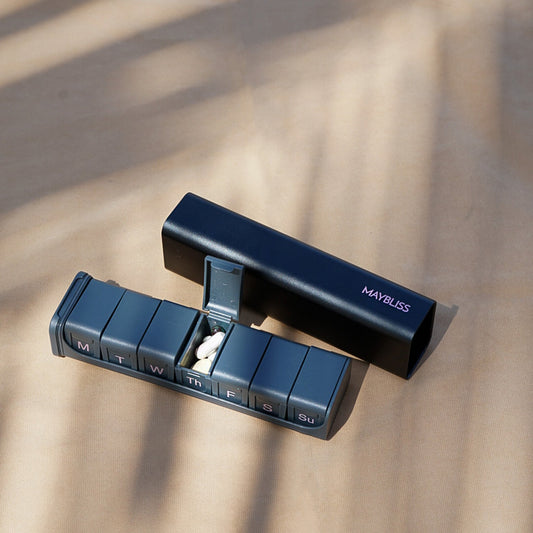
Maybliss approaches this category as a design problem worth solving, pairing a patented magnetic pod-and-tray system with anodized aluminum construction and third-party-tested toxin-free materials. The point is not to make a pill case look expensive. The point is to make your wellness routine feel protected, portable, and genuinely considered.
Clean your organizer regularly with the method recommended by its manufacturer, and let it dry completely before refilling. Do not mix loose pills with powders, gummies, or liquids unless the container is specifically designed for that use. Most of all, pay attention to your supplements themselves. If tablets are discolored, softened, unusually crumbly, or smell different from normal, do not assume the container is the only issue.
A gorgeous organizer should make it easier to keep your routine close, not make you second-guess what is inside. Choose materials with real transparency, protect your supplements from the conditions that degrade them, and let your daily dose feel as intentional as the wellness investment behind it.