
Best Storage for Probiotic Capsules at Home
A probiotic capsule can look perfectly fine long after heat and humidity have weakened what is inside. That is the frustrating part: you can spend real money on a carefully chosen formula, follow a daily routine, and still undermine it with a steamy bathroom cabinet or a sun-warmed travel bag. The best storage for probiotic capsules is the setup that follows the label first, then protects the capsules from their two biggest enemies: moisture and excess heat.
For a premium wellness routine, storage should not be an afterthought. It is part of protecting the investment you make in your supplements - and making sure your daily system is polished enough to actually use.
Best Storage for Probiotic Capsules Starts With the Label
There is no universal rule that every probiotic belongs in the refrigerator. Some formulas are specifically designed to be shelf-stable at room temperature. Others need refrigeration from the moment you bring them home. The manufacturer knows the strain blend, capsule technology, moisture barrier, and stability testing behind that particular product, so its storage instruction is the standard that matters.
Look for language such as “refrigerate,” “keep refrigerated,” “store below 77°F,” or “store in a cool, dry place.” If the label says refrigerate, do not assume an air-conditioned kitchen counter is close enough. If it says shelf-stable, refrigeration may be acceptable, but it is not automatically necessary. Condensation during frequent in-and-out fridge trips can create a moisture issue, especially when a bottle is opened before it has reached room temperature.
A useful distinction: shelf-stable does not mean heat-proof. A probiotic that can live in a pantry may still degrade in a car, near a stove, beside a sunny window, or in a bag left on hot pavement. “Room temperature” means a genuinely temperate indoor environment, not wherever the bottle happens to fit.
The Right Place at Home Is Cool, Dry, and Consistent
For shelf-stable capsules, a closed kitchen cabinet away from the oven, dishwasher, and sink is often a better choice than the bathroom medicine cabinet. Bathrooms are convenient, but showers create repeated spikes in heat and humidity. That damp environment is exactly what you do not want around moisture-sensitive capsules.
Choose a spot with stable conditions. A bedroom drawer, linen closet away from the bathroom, or interior pantry shelf can work beautifully, provided it stays dry and out of direct light. Keep the bottle upright, close the cap immediately after taking a capsule, and avoid leaving it open while you make coffee or finish the rest of your routine.
For refrigerated formulas, use a consistent area inside the refrigerator rather than the door. The door experiences the greatest temperature swings every time someone reaches for sparkling water or salad dressing. A middle shelf toward the back is usually calmer. Keep the bottle tightly closed and away from foods that can leak or create messes.
Do not freeze probiotic capsules unless the manufacturer explicitly says freezing is appropriate. Freezing is not a universal upgrade for freshness. It can affect the capsule shell, packaging, and formula stability in ways that depend on the product.
Keep the Original Bottle for Long-Term Storage
The original probiotic bottle is not just packaging. It may include an induction seal, a desiccant canister, or a moisture-absorbing packet selected to help preserve the formula. Removing capsules from that environment weeks at a time can expose them to more air and moisture than the product was designed to handle.
That does not mean you must choose between a chaotic bottle and an organized routine. It means your storage system should be intentional. Keep the main supply in its original container, then portion only the capsules you need for a short window - such as a day, a workday, or a weekend away. Refill regularly rather than decanting an entire month into any organizer.
Never discard a desiccant packet from a probiotic bottle unless the label directs you to do so. It is there to manage humidity, not as packing waste.
Why Cheap Pillboxes Can Be a Weak Link
A basic drugstore organizer is designed to divide pills. That is a much lower standard than protecting premium supplements. Flimsy hinged plastic, loose lids, unclear seals, and roomy shared compartments can leave capsules rattling beside oils, powders, or other supplements. They can also turn a carefully edited wellness ritual into something that feels disposable.
The practical concern is not that every pillbox instantly ruins probiotics. It is that a poor container adds unnecessary variables: ambient humidity, accidental spills, heat retained in a bag, and repeated exposure whenever one compartment is opened. If your probiotic is refrigerated, leaving a week’s worth in a room-temperature organizer is especially unwise unless the manufacturer confirms that short-term exposure is acceptable.
Material matters, too. People who are particular about what goes into their body are increasingly particular about what their supplements sit against. A toxin-conscious storage system with well-made, easy-to-clean components is a more considered choice than a scratched, aging plastic box with an uncertain material story.
A Smarter System for Daily Doses and Travel
The ideal approach separates long-term preservation from daily access. Store the full probiotic supply according to its label. Then use a compact, closed pod for the dose you plan to take outside the house. This keeps your routine visible and portable without asking a travel container to do the job of the manufacturer’s original bottle for weeks on end.
For a shelf-stable formula, a high-quality pod is excellent for a day at the office, an overnight stay, or a short trip. Keep it out of direct sun, do not leave it in a parked car, and avoid stuffing it into a beach bag or gym locker for hours. Capsules deserve more than the bottom of a tote next to a damp water bottle.
For a refrigerated probiotic, travel requires more planning. A short commute may be fine if the brand permits limited time at room temperature, but longer trips may call for an insulated pouch and cold pack. Keep the capsules dry and protected from direct contact with condensation or melting ice. When in doubt, bring only what you will use during the travel window and check the product’s guidance before you go.
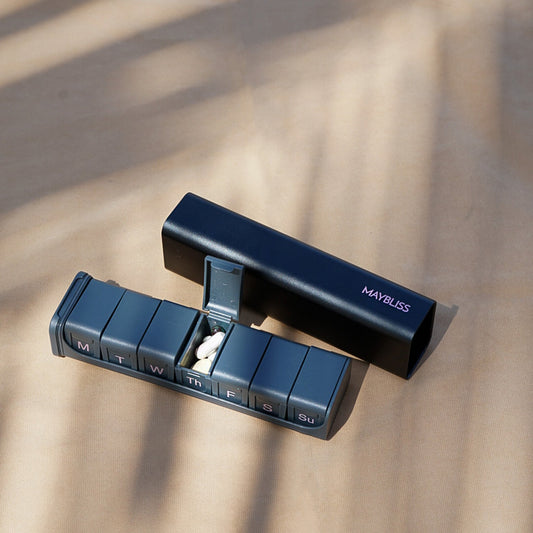
Maybliss is designed for this kind of disciplined portability: a sleek modular pod system that makes a daily dose easy to separate, protect, and carry without defaulting to flimsy plastic clutter. It is a refined layer in the routine, not a substitute for the storage conditions printed on your probiotic bottle.
Small Habits That Protect Capsule Quality
Good probiotic storage is less about creating a complicated ritual and more about removing careless moments. Wash and dry your hands before handling capsules. Do not transfer them onto a wet countertop. Do not store them above the kettle, beside the shower, or in a glove compartment. If a capsule looks unusually soft, cracked, sticky, or discolored, check the label and consider replacing it rather than guessing.
Also pay attention to timing. If your supplement drawer sits in a hot room every afternoon, relocating the bottle is more valuable than buying another organizer. If your refrigerated bottle constantly travels from fridge to counter and back, decide on your dose before opening it and return it promptly. Consistency protects the formula and makes the routine feel effortless.
Expiration dates matter, but they are only as meaningful as the storage conditions behind them. A bottle stored as directed has the best chance of delivering the quality the manufacturer intended through that date. A bottle exposed to heat and humidity may not.
Your probiotic routine should look as considered as the rest of your wellness stack. Keep the main bottle protected, carry only what you need, and give every capsule a cooler, drier, more intentional place to land.