
Can Heat Ruin Supplements? Yes, Sometimes
A beautiful supplement routine can lose its value fast in the wrong environment. Can heat ruin supplements? Yes, prolonged or intense heat can reduce potency, damage delicate oils, compromise live cultures, and even change the texture of capsules and gummies. That does not mean one warm commute destroys every vitamin in your bag. It means your storage habits should match the value of what you take.
For people investing in thoughtful daily wellness, a flimsy organizer left in a hot car is not a small detail. It is a weak point. The goal is simple: keep supplements dry, protected, easy to access, and away from the kinds of heat that make a premium routine less reliable.
Can Heat Ruin Supplements, or Just Make Them Less Effective?
Heat does not affect every supplement in the same way. More often than not, it does not turn a capsule into something visibly alarming overnight. Instead, heat can gradually speed up oxidation and chemical breakdown, leaving a product less potent than the label promises.
How much damage occurs depends on the formula, the temperature, how long it stays hot, and the packaging. A bottle sitting in an air-conditioned bedroom is a very different scenario from supplements sealed in a car during a 95-degree afternoon. Vehicle interiors can become dramatically hotter than the outdoor temperature, especially in direct sun. That is where a casual storage choice can become a real quality issue.
Heat can also create practical problems before it changes a formula on a molecular level. Softgels may stick together or leak. Gummies can melt into one unusable mass. Powder packets can clump when heat and humidity show up together. Capsules can become brittle, sticky, or misshapen depending on their shell and ingredients.
The Supplements Most Sensitive to Heat
Some products deserve more caution than others. If your routine includes any of the following, keep them out of hot cars, sunny windowsills, checked luggage, and bags left near a radiator.
Probiotics and live cultures
Probiotics are among the most temperature-sensitive supplements because they contain living microorganisms. Some strains are designed to remain stable at room temperature, while others need refrigeration from the moment you buy them. The label is the authority here. If it says refrigerate, treat that instruction as part of the formula, not a suggestion.
Even shelf-stable probiotics are not invincible. Extended heat exposure can reduce the number of viable organisms, which is the opposite of what you paid for.
Fish oil, omega-3s, and other delicate oils
Oil-based supplements are vulnerable to oxidation. Heat, light, and oxygen all make that process more likely. A rancid oil may develop an off smell or stronger aftertaste, but it is not always obvious by appearance alone.
Softgels add another concern: heat can make them tacky, misshapen, or prone to leaking. Keep omega-3s and similar formulas in a cool, dark place, with the lid fully secured.
Liquid formulas and tinctures
Liquids are often less forgiving than dry tablets because their ingredients are already dispersed in a solution. Heat can affect flavor, consistency, and ingredient stability. This includes certain multivitamin liquids, herbal tinctures, collagen shots, and wellness syrups.
If a liquid product separates unusually, develops a new odor, or looks different from its normal appearance after a heat event, do not assume shaking will fix it. Check the manufacturer’s guidance before using it.
Gummies, powders, enzymes, and botanicals
Gummies are an obvious casualty of heat, but powders and capsules need attention too. Humidity can turn powders into hard clumps, while heat may affect enzymes and some botanical compounds over time. Herbal products vary widely, so there is no one rule beyond following the storage direction on the label.
What about minerals and standard tablets?
Minerals such as magnesium, calcium, zinc, and iron are generally more stable than live cultures or oils. Many dry tablets also tolerate normal room-temperature fluctuation well. Still, stable does not mean indestructible. Excessive heat and moisture can degrade coatings, affect binders, and compromise packaging seals.
Your magnesium may survive a warm afternoon better than your probiotic, but neither belongs on a dashboard.
Heat, Humidity, and Light Work Together
The medicine cabinet feels like the obvious place to store supplements. In many homes, it is not ideal. Bathrooms tend to cycle through steam, moisture, and temperature changes, which makes them a poor home for products that need cool, dry conditions.
The kitchen can be just as tricky. Cabinets above the stove, beside the dishwasher, or near a sunny window get more heat than most people realize. A drawer or cabinet in a climate-controlled bedroom, office, or pantry is usually a smarter choice.
Light matters, too. Certain ingredients degrade faster when exposed to light, which is why some supplements come in amber or opaque bottles. Do not transfer everything into a clear decorative jar just because it looks cleaner on the counter. Good design should protect the routine, not merely display it.
How to Store Supplements Without Overthinking It
Start with the label. “Store in a cool, dry place” is common language, and it usually means a consistent indoor environment away from direct sunlight and moisture. If a product requires refrigeration, follow that direction exactly. If the label offers a specific temperature range, use it.
Then create a system that makes the right choice effortless. Keep your main supply in its original container whenever possible, especially when the bottle includes a desiccant or protective liner. Those details help manage moisture and are part of the product’s intended storage environment.
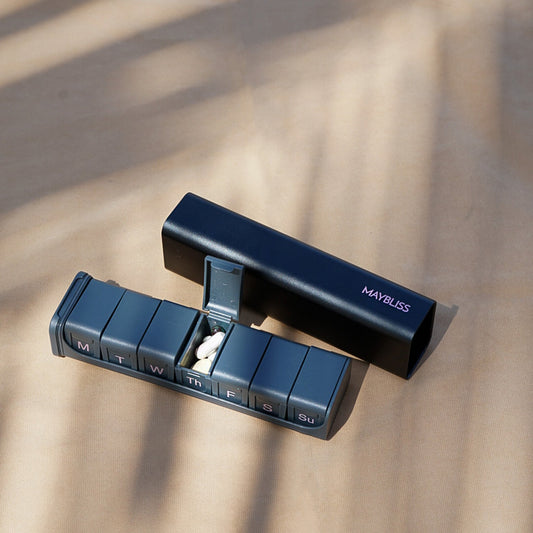
For daily use, transfer only the doses you need for the day or a short trip into a well-made organizer. A sleek, secure pill case is a better fit for your everyday carry than loose capsules rattling around in a cosmetic pouch. Just remember that an organizer protects against spills, friction, and exposure during normal movement. It is not a license to leave supplements in extreme heat.
Maybliss was designed around that distinction: a refined, durable system for keeping a wellness routine organized and protected on the move, without the cheap-plastic feel or disposable clutter of a standard pillbox.
Travel Is Where Storage Habits Get Tested
Travel introduces the exact conditions supplements dislike: hot cars, airport delays, direct sun, crowded bags, and unpredictable hotel rooms. Planning ahead protects both your investment and your consistency.
Keep supplements in your personal item rather than a checked bag when possible. Checked luggage may sit on hot tarmacs or in uncontrolled storage areas, while a carry-on gives you more control. For road trips, bring supplements inside with you at stops instead of leaving them in the car.
If you are traveling with a refrigerated product, use an insulated bag and follow the brand’s handling directions. Do not place supplements directly against loose ice or freezer packs unless the manufacturer specifically advises it. Freezing can be just as problematic as overheating for certain formulas.
For a weekend away, pack only what you will realistically use. Smaller quantities mean less product exposed if a travel day goes sideways. They also make it easier to maintain a clean, intentional setup rather than hauling multiple bulky bottles.
Signs a Supplement May Have Been Damaged by Heat
Visible changes are worth taking seriously, though a normal-looking supplement is not guaranteed to be unaffected. Watch for melted gummies, leaking or fused softgels, cracked capsules, unusual discoloration, hardened powders, broken tablets, or a new odor.
If fish oil smells sharply stale or paint-like, it may be oxidized. If a powder has absorbed moisture and formed hard, damp clumps, its quality may be compromised. If a probiotic was exposed to high heat for an extended time, there may be no visible sign at all, which is why prevention matters more than inspection.
When you are unsure, check the label, contact the manufacturer, or replace the product. This is especially sensible for high-value formulas with sensitive active ingredients. Taking a damaged supplement just because it still looks acceptable is not a meaningful bargain.
Protect the Routine You Pay For
Supplements are often chosen with care: the right magnesium for sleep, omega-3s for daily support, a probiotic that agrees with your system, a travel-ready vitamin stack that keeps your routine steady. Storage should receive the same consideration.
Keep sensitive products cool, dry, and out of direct light. Use their original packaging for long-term storage, carry only what you need, and never mistake a gorgeous organizer for a substitute for climate control. The smartest wellness ritual is not complicated. It is simply designed to protect what you already value.