
How to Create an AM PM Wellness Routine That Sticks
Your supplement routine should not begin with a rattling drawer, a handful of unlabeled bottles, and a last-minute scramble before you leave the house. When you create an AM PM wellness routine around the moments you already repeat, your habits become easier to follow, easier to travel with, and far less likely to disappear on a busy Tuesday.
The goal is not to build a picture-perfect schedule filled with 14 different products. It is to create two polished, realistic touchpoints that support the way you actually live: one that sets up your day and one that helps you close it with intention.
Start With Two Anchors, Not a Longer To-Do List
An effective wellness routine is built on anchors: actions that happen almost automatically. For most people, the strongest morning anchor is brushing teeth, making coffee, or preparing breakfast. At night, it may be washing your face, setting an alarm, or placing your phone on the charger.
Attach your wellness essentials to one of these existing actions. This is more reliable than telling yourself you will take supplements "sometime in the morning." A vague plan asks you to remember. An anchored plan puts the decision on repeat.
Choose anchors that fit your real schedule, not your aspirational one. If you routinely skip breakfast, an AM stack that must be taken with a full meal may not be the right fit. If dinner timing changes every day, tying your evening routine to your skincare ritual may work better than tying it to a specific hour.
Build Your AM PM Wellness Routine Around Purpose
Morning and evening routines do different jobs. Separating them creates a cleaner system and can make your supplement plan feel less like a cluttered checklist.
Design a morning routine that supports momentum
Your AM routine should be quick enough for a rushed weekday but satisfying enough to feel intentional. Start with water, then move into any wellness products your clinician has recommended or that you prefer taking early in the day. Depending on the supplement and its instructions, this may include a multivitamin, vitamin D, probiotics, omega-3s, or a prescribed medication.
Timing is personal. Some supplements are best taken with food, while others may be better tolerated at another time. Read the label, follow your healthcare provider's guidance, and pay attention to how your body responds. A routine is only useful if it feels good enough to maintain.
Keep the morning sequence tight: water, breakfast or coffee, AM supplements, then out the door. If your routine takes 20 minutes to organize before you can take anything, it is overdesigned.
Make the evening routine a signal to slow down
Your PM ritual can feel more restorative. This is often the natural place for products people associate with relaxation, recovery, or sleep support, such as magnesium, if appropriate for them. It is also a smart time for any medications or supplements specifically directed for evening use.
Think beyond pills. A well-considered PM routine might include filling a bedside water glass, setting out tomorrow's wellness essentials, applying skincare, and putting your phone away for a few minutes before sleep. These small cues tell your brain that the day is winding down.
The trade-off is convenience versus precision. Keeping everything at your bedside may make the ritual easy, but some products need protection from bathroom humidity, heat, or direct sunlight. Store products according to their labels, and choose a location that supports both consistency and proper care.
Reduce Friction With a Better Organization System
A premium wellness routine can be undone by cheap storage. Flimsy plastic organizers pop open in bags, trap clutter in awkward compartments, and make expensive supplements feel disposable. When your system looks chaotic, it is harder to trust and less appealing to use.
Start by deciding what belongs in your daily rotation. Separate the products you take every day from occasional items, refills, and backup bottles. Your daily essentials deserve a dedicated place that is visible, protected, and easy to grab.
Then divide by time of day. An AM side and PM side is more intuitive than sorting everything by supplement type. You are not trying to create a pharmacy shelf. You are designing a reliable daily ritual.
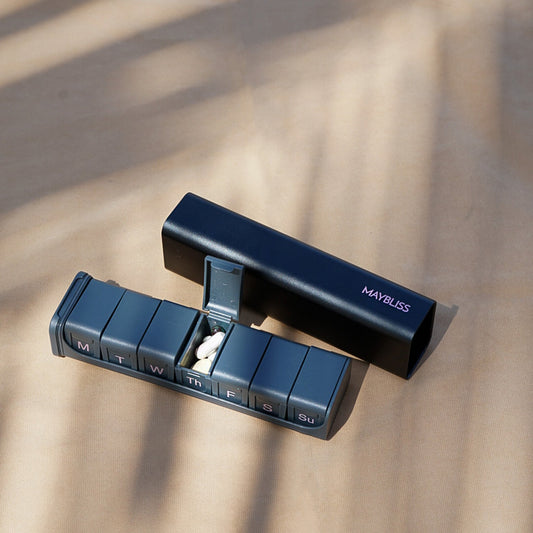
For people who take multiple capsules, travel often, or want their routine to look as considered as the rest of their bag, a modular case is a meaningful upgrade. Maybliss pairs a sleek aluminum tray with magnetic pods, creating a more discreet, toxin-conscious alternative to the standard drugstore pillbox. The point is not simply aesthetics, though gorgeous design helps. It is protection, portability, and a system you will actually want to use in public.
Prepare Once, Then Let the Routine Carry You
The most efficient AM PM wellness routine is not assembled twice a day. Set it up once or twice a week when you have a few unhurried minutes.
Begin by checking labels and confirming you have enough product for the days ahead. Wash and fully dry reusable containers before refilling them. Moisture matters, especially for capsules, powders, and supplements that can degrade or stick together in humid conditions.
As you fill each compartment or pod, keep your system simple. If you need a reminder, use a note in your phone during the first few weeks or place your AM essentials beside your coffee setup and your PM essentials near your nighttime ritual. Once the habit feels established, you can remove the visual prompts without losing the rhythm.
Avoid pre-packing large quantities if a product's label advises keeping it in its original container or if it is especially sensitive to light, moisture, or temperature changes. In those cases, pack only the amount you need for the day or a short trip. Thoughtful organization means respecting the product, not forcing every item into one format.
Make Travel Part of the Design
Travel is where many wellness routines fail. Bottles are bulky, loose capsules get lost at the bottom of a tote, and a rushed packing job leaves you unsure whether you brought what you need. The answer is not to abandon your routine every time you board a flight. It is to create a travel version that is as considered as your at-home system.
Pack only the doses you will need, plus a small buffer for delays. Keep your essentials in a protected, easy-to-access case rather than tossing them into a cosmetic bag where they can spill or be exposed to heat. If you are flying with prescription medication, retain original labeled packaging when needed and follow current travel rules.
Your travel routine can be lighter than your home routine. This is one of the few places where less is often better. Prioritize essentials that help you feel steady, maintain your prescribed regimen, and avoid adding unfamiliar products while you are away from home.
Audit the Routine After Two Weeks
A routine should earn its place. After two weeks, ask a few direct questions: What did I take consistently? What did I avoid? Did the timing work? Did the system fit my mornings and evenings, or did it create more decisions?
If you keep missing your AM supplements, move them closer to an anchor you never skip. If the PM routine feels too ambitious, reduce it to one or two essentials. Consistency with a small routine is more valuable than inconsistency with an impressive-looking stack.
It is also wise to review your regimen with a qualified healthcare professional, especially if you take prescription medications, are pregnant, manage a medical condition, or are considering adding several supplements at once. Premium organization supports better follow-through, but it does not replace informed guidance.
Let Your Routine Look Like Your Life
Wellness is more durable when it feels integrated rather than clinical. Choose tools that protect what you invest in, create a clear place for daily essentials, and make each step feel composed instead of chaotic.
Your AM and PM rituals do not need to be elaborate to be effective. They need to be visible, well-organized, and easy to repeat. Build the version that fits your actual life, then give it the level of care you expect from everything else you use every day.