
Do Supplements Expire Faster Once Opened?
That oversized bottle of magnesium may look perfectly fine six months after you first twist the cap, but its contents have been exposed to a very different environment than the one the manufacturer tested. Do supplements expire faster opened? Often, yes. Opening a bottle introduces air and repeated opportunities for humidity, heat, light, and handling to affect the product - especially if the bottle lives in a steamy bathroom, hot car, or crowded kitchen cabinet.
The expiration date is still useful, but it is not a promise that every opened supplement will perform exactly the same until that date. Storage habits matter. For people who invest in a thoughtful daily stack, protecting potency is not fussy housekeeping. It is part of getting the value you paid for.
Do supplements expire faster once opened?
Most supplements are assigned an expiration date based on stability testing in their original, properly sealed packaging. Once opened, the clock does not suddenly reset to a new, universal deadline. But the conditions inside the bottle change, and some formulas are much more sensitive than others.
Air can promote oxidation. Moisture can make powders clump, soften capsules, and degrade certain ingredients. Light can affect light-sensitive compounds, while high temperatures can accelerate chemical breakdown. Every opening is brief, but a bottle opened daily for months experiences more environmental exposure than one stored sealed in a cool warehouse.
That does not mean an opened multivitamin is automatically ineffective. Dry tablets stored tightly closed in a cool, dark place may remain stable well within the labeled date. The practical answer is that supplements can expire faster after opening, and the degree depends on the formula, packaging, climate, and care you give it.
Which supplements are most vulnerable after opening?
Not every format reacts the same way. A hard, dry tablet is generally more forgiving than a gummy or liquid, and a dark, tightly sealed bottle gives a formula more protection than a loose bag or clear jar.
Oils, softgels, and omega-3s
Fish oil, krill oil, flax oil, and other oil-based products deserve extra attention because fats can oxidize. Heat and air are the enemies here. A rancid smell, sharp off-taste, leaking softgel, or unusually sticky capsule is a reason to stop using the product, even if the date is still months away. Follow the label closely, since some oils are best refrigerated after opening.
Probiotics and live cultures
Probiotics contain living organisms, so their viability can decline with time and heat. Some are designed to be shelf-stable, while others require refrigeration from the moment you buy them. The label is the authority. Leaving a refrigerated probiotic in a warm bag, car, or sunny windowsill can matter far more than transferring a few days' worth to a clean organizer.
Powders, gummies, and effervescents
Powders readily absorb moisture. If your collagen, electrolyte mix, or greens powder has hardened into a stubborn block, it may have been exposed to humidity. Gummies can melt, fuse together, or dry out. Effervescent tablets are particularly sensitive to moisture because their intended reaction can start early. Keep desiccant packets in the original container unless the label says otherwise, and never assume a clumped product is merely inconvenient.
Vitamins that react to light or air
Vitamin C and some B vitamins may lose potency gradually with exposure to oxygen, light, or humidity. Herbal extracts can also be variable, particularly when they contain aromatic oils or plant compounds that are less stable than a basic mineral tablet. The goal is not perfection. It is avoiding avoidable exposure.
The expiration date is not the only quality check
An expiration date does not tell you whether a supplement sat in a delivery truck during a heat wave or spent weeks near your shower. It also cannot detect a damaged seal, a cap that was left loose, or moisture that entered the container each morning.
Use your senses alongside the date. Discard a product that has developed an unusual odor, discoloration, visible mold, moisture damage, leaking capsules, or a major change in texture. Do not try to rescue questionable supplements by drying them out or mixing them into food. A product can look normal and still lose potency, but obvious changes are a clear sign that its condition is no longer trustworthy.
Supplements that are only slightly past their date are not always dangerous. More commonly, the concern is reduced potency. Still, products with oils, probiotics, liquids, or visible deterioration are poor candidates for guesswork. When the formula supports a specific health need, replacing it is usually the cleaner decision.
How to store an opened supplement bottle well
The best storage setup is remarkably unglamorous: cool, dry, dark, and tightly closed. That rules out the bathroom medicine cabinet for many households. Showers create humidity spikes, and a sunny countertop creates repeated heat and light exposure. A kitchen drawer away from the stove, or a bedroom cabinet away from direct sun, is often a better home.
Close the cap promptly after each use. Avoid reaching into bottles with wet hands, and do not remove cotton or moisture-control inserts simply because they seem like packaging clutter. They are often there to help manage the internal environment. Keep supplements in their original bottles for long-term storage, where labels, lot numbers, desiccants, and product-specific instructions remain together.
A weekly organizer has a different role. It is built for routine visibility and portability, not for turning a month of supplements into countertop decor. Pre-portion only the amount you will realistically use soon, then refill from the original bottle. For especially sensitive products such as refrigerated probiotics, liquids, oily softgels, or moisture-reactive tablets, follow the label before moving them at all.
A pill organizer can protect your routine - if you use it strategically
Cheap plastic organizers are often an afterthought: flimsy hinges, vague compartments, and a look that encourages you to hide the whole thing in a bag. That is not ideal for a carefully built wellness routine or expensive daily formulas.
A well-designed organizer helps by keeping the day’s pills contained, visible, and less likely to spill into the bottom of a tote. But no organizer can reverse heat damage or make a moisture-sensitive product shelf-stable. The smart move is to load only what you need for a day, weekend, or workweek based on the formula and your conditions, then keep the main supply sealed correctly at home.
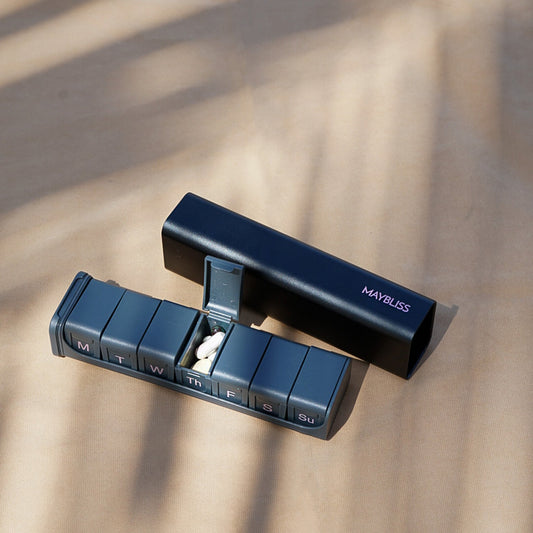
This is where premium construction earns its place. A sleek system such as the Maybliss BlissPod Pro makes daily carry feel intentional, with separate pods that keep a routine organized instead of loose in a pocket or rattling through a bag. Its value is practical as much as visual: better organization reduces missed doses, rushed handling, and the temptation to carry an entire bottle everywhere.
For travel, think about the destination rather than just the flight. A climate-controlled hotel room is different from a beach bag, a parked car, or a long day outside. Keep your organizer out of direct sun, avoid leaving it in hot vehicles, and bring only the quantity you expect to use. If you need to carry medication or a supplement whose identity matters in an emergency, retain the original labeled container or follow the guidance provided by your clinician and pharmacist.
Small storage choices protect a bigger investment
A daily supplement routine is built one ordinary morning at a time. You do not need a laboratory cabinet to care for it. You need a sealed original bottle, a dry place away from heat and sun, and a portable system that carries only what the day requires. Treat your supplements with the same consideration you gave them when you chose them, and your routine will look better, travel better, and make more sense from first capsule to last.