
How to Travel With Vitamins Safely and Stylishly
The worst place to discover a burst fish-oil softgel or a missing magnesium capsule is halfway through a travel day. If your wellness routine matters at home, it deserves better than a rattling zip bag and a flimsy drugstore organizer on the road. To travel vitamins safely, think beyond simply fitting pills into a smaller container. You need a system that protects your supplements, keeps your doses identifiable, and looks considered when your routine happens at 30,000 feet.
How to Travel With Vitamins Safely
Start with the supplements you will realistically take. Travel is not the moment to bring every powder, tincture, and half-finished bottle from your cabinet. Build a concise, destination-appropriate stack around your nonnegotiables: daily medications, foundational vitamins, and the supplements that support sleep, digestion, hydration, or recovery while you are away.
Then count the days, add a small buffer, and pack only that amount. A two- or three-day cushion covers delayed flights and extended stays without creating a bulky, confusing surplus. This edit is not about being restrictive. It is about making the routine easy enough to keep.
For prescription medications, original labeled containers are the safest choice whenever possible. They clearly identify the medication, prescribing information, and your name if questions arise during security screening or at a border. If you use a compact organizer for daily doses, keep the original prescription bottle in your carry-on as backup.
Vitamins and nonprescription supplements offer more flexibility, but identification still matters. Keep a photo of each product label on your phone or bring the label section from the bottle in a separate pouch. This is especially useful when you carry similar-looking capsules, when a clinician needs to know what you take, or when you simply forget whether the white tablet was zinc or vitamin D.
Your Carry-On Is the Right Home
Put vitamins, medications, and other wellness essentials in your personal item or carry-on, not checked luggage. Checked bags can sit in hot loading areas, cold cargo holds, or humid conditions, and they can also disappear for a day or two. That is an inconvenience for toiletries. For a daily medication or a carefully planned supplement routine, it is unnecessary risk.
Carry-on storage also gives you control over timing. A long travel day may mean taking a dose with breakfast at the airport, after a meal on the plane, or once you arrive at your hotel. When the routine is accessible, you are far more likely to follow it.
There is one practical exception: very large quantities, duplicate backup bottles, or supplements you will not need in transit can go in checked luggage if they are well protected. Still, keep enough for several days in your carry-on. The goal is continuity, not perfection.
Protect Supplements From Heat, Humidity, and Pressure
Supplements are not decorative objects. Oils can leak, gummies can melt together, powders can clump, and capsules can soften when moisture gets involved. The beautiful part of a compact travel setup is not minimalism for its own sake. It is protecting what you already invested in.
Choose a case with a secure closure and separate compartments so capsules do not migrate, crush, or coat each other in residue. Avoid loose pills in the bottom of a cosmetic bag, where a leaking serum or damp toothbrush case can turn a simple routine into a cleanup project.
Keep your organizer out of direct sun, parked-car heat, and the steamy bathroom counter. Hotel bathrooms are convenient, but they are often the most humid room in the suite. Store supplements in a drawer, bedside table, or climate-controlled section of your bag instead. If you are headed somewhere exceptionally hot or humid, bring smaller quantities and replenish from the original packaging as needed.
Liquid supplements deserve their own plan. Most airport security rules treat them like other liquids, gels, or aerosols, so check current requirements before you leave. Tighten caps, place each bottle in a sealed bag, and do not assume a beautiful bottle is a leakproof travel bottle. Powders can also draw extra attention at screening, particularly in larger amounts. Keep them labeled and pack only what you need.
Use a Two-Layer Packing System
The most polished approach combines a compact daily organizer with an information backup. Your daily case should hold the exact doses you want within reach. Your original bottles, label photos, or a short written inventory provide the context behind those doses.
This two-layer system solves the compromise between portability and clarity. You do not have to carry seven oversized bottles to brunch, the gate, or a client dinner. But you also do not lose track of what you brought or how to replace it if a pod is misplaced.
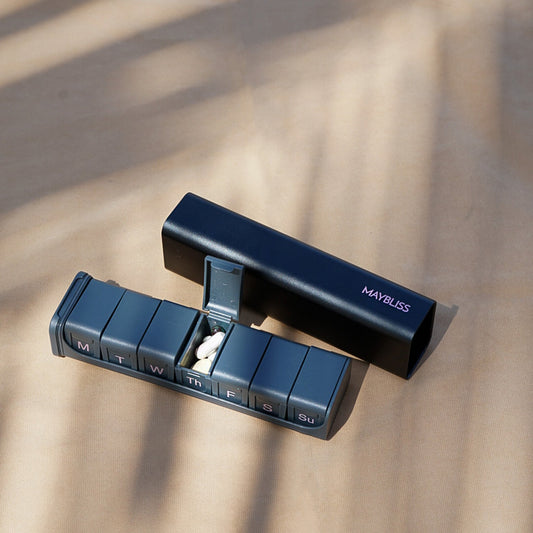
A modular case is especially useful when your routine changes by day. You may want one pod for the flight, one for morning essentials, and another for nighttime magnesium. Rather than carrying a giant weekly organizer with compartments you do not need, you can take the exact portion of your system that fits the trip.
Maybliss was designed around this kind of intentional portability: a premium modular pod-and-tray system that makes a wellness routine feel more like a refined travel accessory than a medical necessity. The point is not to make pills precious. It is to give your daily investment a cleaner, more protective home.
Keep the Routine Simple Enough to Repeat
Travel disrupts cues. Breakfast moves to 5:30 a.m., dinner happens in a different time zone, and the countertop you use at home is nowhere in sight. A complicated supplement schedule can quickly become a collection of unopened compartments.
Anchor doses to moments rather than the clock when appropriate. For example, take supplements intended with food at your first substantial meal, and keep nighttime products beside your toothbrush or book. Prescription medications and supplements with specific timing instructions are different - follow directions from your clinician or pharmacist, particularly when crossing time zones.
It also helps to build in a visual check. Choose a case that lets you see, at a glance, whether you packed today’s dose or already took it. This is a small design detail with a meaningful payoff: less second-guessing and fewer accidental double doses.
Do not start a new supplement immediately before a major trip unless your healthcare professional recommends it. A new product can cause digestive changes, sleep disruption, or an unexpected reaction at exactly the wrong moment. Travel is better suited to the routine your body already knows.
Be Thoughtful About International Travel
Crossing a state line with a standard vitamin bottle is not the same as entering another country with a full supplement stack. Rules vary, and certain ingredients that are sold legally in the United States may be restricted elsewhere. Before international travel, check the destination’s current rules for medications, hemp-derived products, controlled substances, and supplements with unusual or high-dose ingredients.
Bring only personal-use quantities, keep prescription medications clearly labeled, and avoid transferring unfamiliar powders or capsules into unmarked containers. If a product is essential, documentation from your clinician may be wise. This is less about expecting trouble and more about traveling with a setup that can explain itself.
What Not to Do With Travel Vitamins
A few shortcuts create outsized problems. Do not combine every capsule into one container to save space. Do not rely on memory to identify look-alike pills. Do not leave supplements in a hot car while you stop for lunch, and do not toss a week of loose softgels into a wallet pocket.
Also resist the urge to pack a maximalist wellness cabinet for a three-day trip. More products mean more volume, more uncertainty, and more chances for something to leak or get skipped. A thoughtfully edited set, stored in a case that feels good to use, is the luxury move.
Your travel routine should feel as composed as the rest of your carry-on. Pack the essentials, protect them from the conditions that can compromise them, and give each day’s dose a dedicated place. When your vitamins are organized with intention, staying consistent becomes one less thing to manage wherever you land.