
Pill Bottles Versus Dose Containers Compared
A drawer full of half-used vitamin bottles is not a wellness routine. It is friction disguised as good intentions. When considering pill bottles versus dose containers, the real question is not which one holds capsules. It is which format makes your daily stack easier to protect, carry, and actually take.
Original bottles have a place, especially for long-term storage and prescription information. But they were designed for dispensing, not for a polished daily ritual. A well-designed dose container system turns the handful of bottles on your counter into a clear, portable plan - without making your supplements look or feel like an afterthought.
Pill Bottles Versus Dose Containers: The Real Difference
Pill bottles are built around inventory. They hold a large supply, display the product label, and often include a desiccant packet to help manage moisture while the seal remains intact. For prescriptions, that label can contain vital instructions, refill details, and identification information.
Dose containers are built around behavior. They divide a daily or travel-ready amount into accessible portions, so you are not opening five bottles at breakfast or packing a rattling assortment of containers before a flight. The best ones make your routine visible at a glance and remove the small decisions that derail consistency.
That distinction matters. If your supplements stay tucked in a cabinet because assembling them feels tedious, a beautiful label and a large bottle do very little for adherence. A dose container does not replace the original bottle as your product archive. It creates a better interface for the doses you intend to take now.
Where Pill Bottles Still Win
There is no reason to pretend every capsule belongs outside its original packaging. For large quantities, pill bottles are efficient. They preserve the manufacturer label, lot information, expiration date, and directions in one place. That is especially useful for prescriptions, products with specific storage requirements, or supplements you use only occasionally.
Some products should also remain in their original containers until you are ready to portion them. Softgels, probiotics, powders, gummies, and moisture-sensitive formulas can have different storage needs. Check the label first. If it says to refrigerate, avoid light, or keep tightly closed, follow those directions rather than assuming any dose container is automatically suitable.
Prescription medications deserve extra care. Keep the pharmacy-labeled bottle available, and avoid mixing different medications into one unmarked compartment. A daily organizer can be helpful when it is used thoughtfully, but it should never erase the information you need to identify a medication, follow dosage instructions, or respond to an emergency.
Why Dose Containers Make Daily Routines Easier
The problem with pill bottles is rarely the bottle itself. It is the repetition. Twist. Open. Count. Close. Repeat. Do that across magnesium, vitamin D, fish oil, a multivitamin, and a prescribed medication, and even a five-minute routine starts to feel cluttered.
A dose container lets you prepare once and move through the week with less visual noise. Instead of seeing a shelf of products, you see the doses that matter today. That visibility is deceptively powerful. When your morning or evening portion is already assembled, the habit has a clear starting point.
Portability is another decisive advantage. Tossing full-size bottles into a work tote or carry-on adds bulk, creates noise, and invites the possibility of loose caps. A compact dose container gives your essentials a defined home. It is more discreet at a restaurant, in an office, or beside a hotel bed, and it prevents your wellness routine from becoming travel clutter.
Protection Is About More Than a Closed Lid
Not all dose containers are created equal. The flimsy plastic weekly organizer at the drugstore may solve the basic sorting problem, but it often creates new ones: loose hinges, unreliable closures, pill dust in the corners, and a look that belongs in a forgotten bathroom cabinet.
For people investing in premium supplements, storage should feel considered. Look for secure closures that keep portions contained in a bag, materials selected with toxin-conscious use in mind, and a construction that can withstand daily handling. If your organizer opens when it hits the bottom of your tote, it is not organizing anything.
Heat and humidity require nuance. No portable container can make temperature-sensitive supplements invincible in a hot car or a steamy bathroom. The smarter approach is to keep your main supply in the manufacturer-recommended conditions, portion only what you need for a reasonable window, and choose a case that protects those portions from spills, crushing, and unnecessary exposure while you are out.
Material matters here, too. Cheap plastic can feel disposable, stain easily, and make an expensive wellness routine feel strangely careless. A premium system with durable, tested materials and thoughtfully separated compartments is not just prettier. It is built for repeat use, clean handling, and the reality of life beyond your kitchen counter.
Choosing the Right Dose Container Format
The right setup depends on how you live. If you take a consistent morning stack at home, a simple daily format may be all you need. If your schedule changes constantly, individual removable pods make more sense because you can bring one day, one dose, or a few essentials without carrying the entire week.
Modularity is particularly valuable for travelers and busy professionals. A fixed seven-day box assumes every day looks the same and every dose needs to go everywhere with you. A pod-based system lets you build around the actual moment: a post-workout supplement, an evening magnesium dose, or a full day away from home.
Capacity deserves an honest look. Large tablets, bulky softgels, and multiple capsules can overwhelm shallow compartments. Before choosing a case, consider the physical size of your real routine, not just the number of products you own. A gorgeous organizer that cannot hold your fish oil is still a compromise.
The same applies to labeling. Some people prefer day-of-the-week cues. Others want a minimal system that fits a repeating routine. For medications, clear identification is essential. For supplements, understated organization may be enough. The goal is not to create a more complicated tracking system. It is to make the next right action feel obvious.
A Better System Uses Both
The strongest approach is not pill bottles or dose containers. It is pill bottles for reserve supply and dose containers for daily life.
Keep your full bottles in a cool, dry location according to their labels. Use a regular reset - Sunday evening, the first of the month, or whenever your routine naturally slows down - to portion the next few days. This helps you notice when you are running low, prevents overpacking, and keeps your countertop from turning into a supplement warehouse.
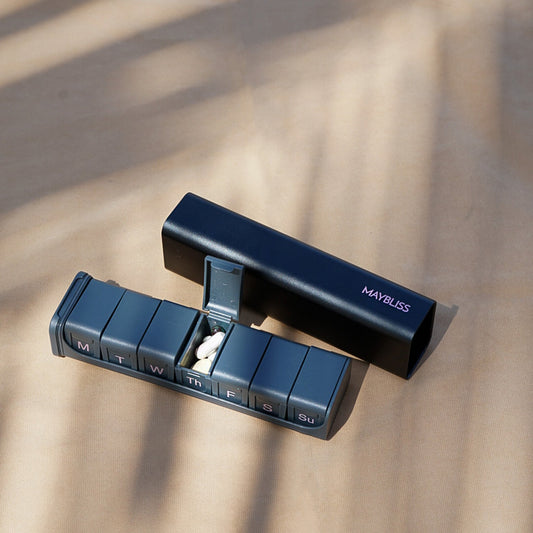
For a more elevated version of this system, Maybliss uses modular magnetic pods and a sleek tray format that separates home organization from on-the-go carry. The idea is simple: your wellness accessories should work as hard as your routine does, while looking far more polished than a disposable plastic pillbox.
When a Dose Container Is Not the Best Choice
There are times when the original bottle should remain your primary format. If you are starting a new prescription, adjusting doses, managing multiple medications, or caring for someone with complex health needs, keeping instructions and identification front and center is more valuable than streamlining everything into compartments.
Be cautious with supplements that are sticky, fragile, unusually large, or explicitly packaged for protection from air or light. And if children or pets are in the home, prioritize secure, inaccessible storage. A portable dose container should not be treated as child-resistant unless it is specifically designed and labeled that way.
A thoughtful routine does not mean decanting every product you own. It means choosing the format that protects the product and supports the person taking it.
Your supplements represent an investment in how you want to feel. Give them a system worthy of that intention: keep the originals where they belong, carry only what you need, and let your daily dose look as composed as the rest of your life.