
Should Vitamins Stay in Bottles? The Smart Answer
A $40 supplement bottle is designed to do more than hold capsules. It may block light, manage moisture, display the expiration date, and keep a carefully measured formula in its intended environment. So, should vitamins stay in bottles? For long-term storage, usually yes. For the vitamins you need to take today, this week, or while traveling, a well-designed pill case can be the more practical choice.
The smartest routine is not blindly keeping every bottle in the cabinet or dumping an entire month of supplements into a generic plastic organizer. It is knowing what each format does well, then using both with intention.
Why original vitamin bottles still matter
Supplement packaging is part of the product. Manufacturers select bottle color, cap style, seals, desiccant packets, and sometimes individual blister packs based on what the formula needs to remain stable. That is especially relevant for supplements that are sensitive to heat, humidity, air, or light.
The original bottle also carries information you may need: the Supplement Facts panel, dosage directions, lot number, expiration date, allergen details, and brand-specific storage instructions. If something looks, smells, or tastes off, that label gives you a reference point. It also prevents one of the most common organization mistakes: forgetting exactly what an unmarked capsule is.
For these reasons, unopened bottles and bulk supply should generally remain in their original packaging until you are ready to use them. Keep them in a cool, dry place away from direct sunlight. A bathroom medicine cabinet may seem convenient, but repeated showers can turn it into a humid environment that is less than ideal for many supplements.
The supplements that deserve extra caution
Not all vitamins are equally delicate. A dry tablet is often more forgiving than a softgel, probiotic, gummy, powder, or oil-based supplement. Fish oil and other softgels can be more vulnerable to warmth. Probiotics may have specific temperature requirements. Gummies can stick together in heat, while effervescent tablets can react badly to moisture.
If the label says refrigerate after opening, protect from moisture, or store below a certain temperature, follow that instruction rather than treating the supplement like an ordinary capsule. Blister-packed products are another exception. The individual seal is often doing meaningful protective work, so it is best to leave those doses sealed until use.
Prescription medications require their own level of care. Some should stay in their original pharmacy container for safety, identification, insurance, and legal reasons. When in doubt, ask your pharmacist before transferring prescription medication into any organizer.
When moving vitamins into a pill case makes sense
A daily organizer is not automatically bad for supplements. In fact, it can be the difference between buying a beautiful wellness stack and actually taking it consistently. The key is limiting the transfer to the amount you can reasonably use soon and choosing storage that protects your doses from spills, unnecessary exposure, and mystery-pill confusion.
For most stable, dry tablets and capsules, pre-sorting a few days to a week of doses is a sensible middle ground. You retain the bulk supply in its original bottle, including its label and moisture-control materials, while your current doses become easier to see, carry, and take.
That approach is particularly useful when your routine includes several products. Opening five or six bottles every morning creates friction. It also leaves bottles scattered across counters, invites missed doses, and makes travel feel needlessly chaotic. A thoughtfully organized pod turns a pile of wellness products into a clear daily ritual.
The real question is how long and how well
The question is less "bottle or pill case?" than "how long will these vitamins sit outside their intended packaging, and what will they be exposed to?" A dose packed for your workday is very different from a month's worth of capsules stored in a loose compartment near a sunny window.
A premium organizer should close securely, keep individual doses separated, and be easy to clean. It should also avoid the flimsy, disposable feel of traditional drugstore pillboxes, where lids pop open in a bag and supplements end up mixed with lint, receipts, and whatever else is at the bottom of your tote.
Material matters, too. If you spend intentionally on magnesium, omega-3s, adaptogens, and practitioner-grade vitamins, it makes little sense to transfer them into a cheap plastic container you do not trust. Choose a system with thoughtfully tested, toxin-conscious components and a durable exterior that can handle real life.
Should vitamins stay in bottles at home?
At home, keep your reserve supply in the original bottles and create a short refill rhythm for your organizer. Many people find that a Sunday evening reset works well: check what is running low, refill several days of doses, and return every bottle to its proper storage spot.
This system keeps your cabinet orderly without sacrificing product protection. You have the label when you need it, the original bottle's light and moisture defenses working for the remaining supply, and your daily doses ready when the morning gets busy.
It also gives you a useful checkpoint. If you are consistently skipping a supplement, you can see it clearly and decide whether the product still belongs in your routine. If a dose changes, you can update your organizer immediately rather than discovering weeks later that you have been taking the wrong amount.
Avoid filling a pill case and leaving it in a hot car, on a windowsill, or in a steamy bathroom. Even the best organizer is not a substitute for sensible storage. Heat is especially relevant for commuters, travelers, and anyone who keeps wellness essentials in a car between errands.
A better strategy for travel and busy days
Travel is where the original bottle can become impractical. Multiple bulky containers take up space, make it harder to find what you need, and turn a polished carry-on into a rattling supplement drawer. Yet tossing loose pills into a zip bag is not an upgrade. It offers no structure, no spill control, and no confidence when you are reaching for your evening magnesium at 11 p.m. in a hotel room.
Pack only the doses you will use during the trip, plus a modest buffer for delays. Keep a photo of labels or a written list of product names and dosages on your phone, particularly if you take several similar-looking capsules. For international travel or prescription medication, check destination-specific rules and keep medications in their original labeled containers when required.
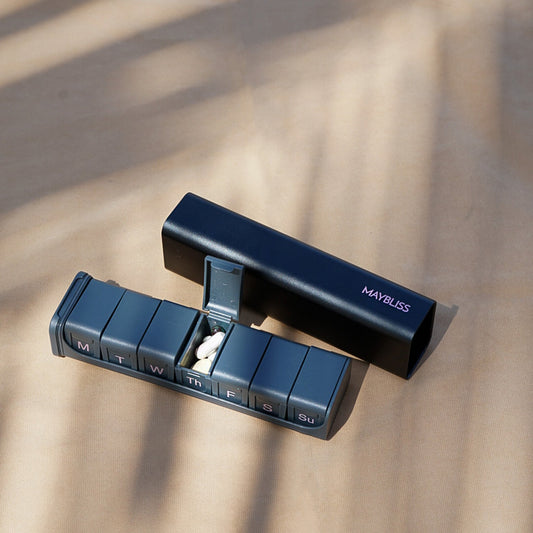
A modular system earns its place here. Maybliss BlissPod Pro is designed for people who want the convenience of portable doses without carrying a cluttered lineup of bottles, using magnetic pods and a sleek, durable tray to keep a routine organized and discreet. The point is not to decant everything forever. It is to carry the right amount beautifully and securely.
Signs your transferred vitamins should be discarded
An organizer makes routines easier, but it cannot reverse damage once a supplement has been exposed to poor conditions. If capsules are melted, sticky, cracked, unusually soft, discolored, or have a noticeably different odor, do not take them. The same goes for tablets that are crumbling or powders that have clumped from moisture.
Use common sense with timing, too. If you discover a forgotten compartment that has been sitting in a warm bag for weeks, replace those doses rather than guessing. Supplements are an investment in how you feel. Treating them like loose change defeats the purpose.
The most elevated routine is not the one with the most bottles on display. It is the one that protects what you bought, removes friction from your day, and makes taking care of yourself feel natural. Keep the reserve supply in its protective packaging, carry only what you need, and let your organizer do what it does best: make consistency look effortless.