
Supplement Stack Organization Guide for Daily Use
Your supplement routine should not begin with opening a crowded cabinet, knocking over three bottles, and wondering whether you already took your magnesium. When you invest in quality vitamins, adaptogens, probiotics, or prescriptions, the storage experience matters. This supplement stack organization guide is about building a system that feels precise, protective, and genuinely pleasant to use every day.
A good stack is not defined by how many capsules you own. It is defined by whether you can take the right ones, at the right time, without friction. The goal is less counter clutter, fewer travel mishaps, and a routine polished enough to keep in sight.
Start With Your Actual Routine, Not a Bigger Organizer
Before choosing compartments or filling pods, take inventory of what you take and why. Pull every bottle from the cabinet, including the products that have drifted behind protein powder and electrolyte packets. Check expiration dates, serving sizes, and instructions. Anything you no longer use, cannot identify, or have been advised to stop taking should not earn a place in your daily setup.
Then separate your stack by timing. Some people have a simple morning-and-evening rhythm. Others take supplements with breakfast, lunch, dinner, or around workouts. Medication directions take priority over convenience, so follow the label and your clinician's guidance rather than forcing every item into the same schedule.
This small audit does more than reduce clutter. It tells you what kind of organization you actually need. A once-daily multivitamin does not need the same access as a midday probiotic or a travel-only electrolyte tablet. When every item has a purpose and a time, your system becomes easier to maintain.
Keep a Reference for Bottles and Details
A portable case is ideal for your daily doses, but the original container still has a job. It holds lot information, expiration dates, ingredient lists, and use instructions. Keep bottles in a cool, dry cabinet away from direct sun, and use a simple note on your phone or a small written checklist to track what belongs in each daily compartment.
That reference is especially useful if your stack changes seasonally, if two capsules look alike, or if you share household storage. It is a safeguard against the most common organization error: relying on memory when life gets busy.
Build Your Supplement Stack Around Moments
The most elegant routines are built around moments, not an arbitrary Monday-through-Sunday format. If you take the same supplements daily, organize by when you will actually reach for them: morning, with food, afternoon, evening, or travel backup.
For a simple routine, that may mean one pod for the first part of your day and one for the last. For a more involved stack, assign a compartment to each distinct moment. The point is to create a visual cue that makes adherence feel automatic. Seeing a prepared pod after breakfast is far more useful than seeing six bottles with competing instructions.
Avoid combining everything simply because it fits. Separate items when timing differs, when you need to identify a dose quickly, or when one product is best kept in its original packaging until use. Softgels, powders, gummies, and large capsules may also need different storage approaches. Organization should make the routine clearer, not turn each compartment into a mystery mix.
Choose Capacity With Intention
Oversized organizers often create a new version of clutter. They take up space, look clinical on a countertop, and encourage you to carry an entire week of supplements when you only need a day or two. Tiny cases can be just as frustrating when they cannot accommodate fish oil, larger magnesium capsules, or a few wellness essentials.
Look for modular capacity instead. A system that lets you use only the pods you need keeps your daily carry compact while leaving room to expand on travel days. It also lets you separate a minimal workday routine from a fuller weekend or vacation stack.
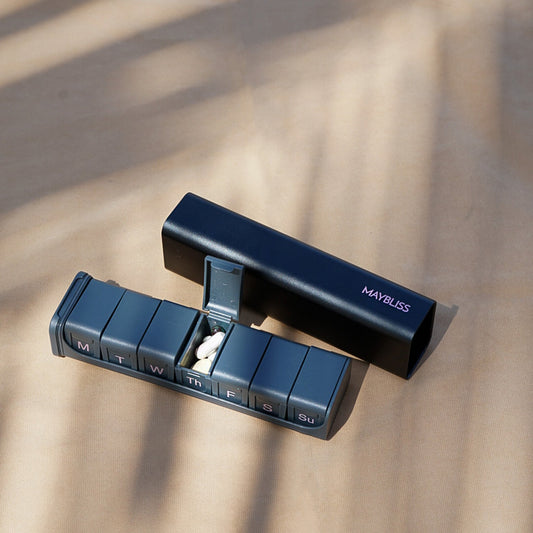
A thoughtfully engineered modular case earns its place because it adapts. The patented magnetic pod-and-tray design of Maybliss, for example, keeps individual portions together in a sleek format without asking you to settle for a bulky drugstore pillbox. That is the difference between storing pills and designing a ritual you will actually maintain.
Protect What You Paid For
Supplements are not decorative countertop accessories. Heat, humidity, loose caps, and bag spills can make a perfectly good routine feel careless fast. Storage conditions vary by product, so always check the label. Some items are more sensitive to moisture or temperature than others, and certain products may need refrigeration or their original sealed packaging.
For the supplements that can be portioned in advance, choose a case designed to close securely and keep individual doses contained. A spill barrier matters when your organizer is sliding between a laptop, sunglasses, and charging cable. So does durable construction. Flimsy hinges and thin plastic are a poor match for expensive capsules and the daily wear of commuting or travel.
Material choice matters, too. If you are intentional about what goes into your body, it is reasonable to be intentional about what touches your wellness essentials. Premium anodized aluminum exteriors and third-party-tested toxin-conscious components offer a considered alternative to disposable-feeling plastic organizers. The best case looks refined on your vanity and performs confidently at the bottom of your tote.
Do Not Pre-Pack Indefinitely
Pre-portioning is useful, but more is not always better. A week may be practical for stable tablets in a dry home environment. A shorter window can make more sense for products affected by humidity, heat, or light exposure. If you are unsure, preserve the original packaging until closer to use and follow the manufacturer's storage directions.
This is where a modular setup shines. You can prepare only what you need for the next few days, refresh your pods quickly, and avoid hauling a full medicine cabinet everywhere you go.
Create a Travel Stack That Does Not Spill
Travel exposes weak organization immediately. Airport security lines, hotel bathrooms, warm cars, and overstuffed carry-ons are not forgiving environments for loose pills in a zipper bag. Build a travel stack around the length and purpose of the trip, then pack a small buffer in case of delays.
Keep daily doses separate from backup supply. Your ready-to-take pods should be easy to access in a personal item, while additional bottles or clearly labeled reserve portions can stay packed away. For medications, original labeled containers may be the most practical choice, particularly for air travel or international trips. Requirements can vary, so check your destination and carrier guidance before leaving.
A discreet, gorgeous case also changes how likely you are to use it. You should be able to take your supplements at your desk, at a restaurant, or in a hotel lobby without pulling out a rattling plastic box that feels borrowed from a pharmacy aisle.
Refresh Your System Once a Week
The final piece is maintenance. Pick one consistent moment each week, perhaps Sunday evening or the night before your busiest workday, to refill your daily portions. Wipe the tray and pods as directed, confirm your supply, and look ahead at any travel, dinners, or schedule changes that could alter timing.
Use that reset to notice what is not working. If you regularly skip an afternoon dose, the answer may be a more visible pod in your work bag, not another reminder app. If a compartment is always overfilled, split that moment into two pods or reconsider what truly belongs in your on-the-go routine.
A well-organized stack does not make wellness performative. It makes consistency easier. Give your daily supplements a place that protects their value, respects your time, and looks as intentional as the rest of your routine.