
Supplement Storage for Humidity That Works
A premium supplement routine can unravel surprisingly fast in a steamy bathroom. Capsules soften, powders clump, gummies sweat, and that expensive magnesium suddenly looks less like a wellness investment and more like something rescued from the bottom of a gym bag. Smart supplement storage for humidity is not about being precious. It is about protecting what you deliberately chose to put in your body.
Humidity is one of the quietest threats in a wellness cabinet because it does not always announce itself immediately. A bottle can look perfectly fine while repeated exposure to warm, damp air gradually changes the texture, stability, and usability of what is inside. The fix is less complicated than most people think, but it does require moving beyond the standard medicine-cabinet setup.
Why Humidity Changes Your Supplement Routine
Many supplements are hygroscopic, meaning they naturally pull moisture from the air. Some are especially prone to this: powdered drink mixes, probiotics, electrolytes, chewables, gummies, herbal capsules, and minerals such as magnesium. Once moisture enters the picture, powders may harden into stubborn clumps, capsules can become tacky or brittle, and tablets can lose their clean, dry finish.
That does not mean every supplement becomes unsafe the second it encounters humidity. The practical concern is cumulative exposure. Opening a bottle after every hot shower, leaving it on a sunny kitchen counter, or carrying a loosely sealed container through a humid commute creates repeated opportunities for moisture to get in.
There is also a routine problem. When supplements look degraded or become difficult to separate, people skip them. A beautiful, reliable system protects more than the product. It protects consistency.
The Bathroom Is Usually the Wrong Place
The bathroom cabinet feels convenient, but convenience is not the same as protection. Showers create rapid swings in temperature and moisture, and those fluctuations travel far beyond the shower door. A closed cabinet slows exposure, but it does not make the space dry.
For most daily vitamins and capsules, a cool, dry drawer in a bedroom, office, or kitchen pantry is a better home. Choose a location away from the stove, dishwasher, sink, and direct sunlight. The ideal storage spot is boring in the best way: stable, shaded, and not subject to clouds of steam.
The exception is the label. Some products have specific storage instructions, particularly probiotics, liquid supplements, fish oil, and certain prescription medications. If a label calls for refrigeration or gives a defined temperature range, follow it. A gorgeous organizer cannot override manufacturer guidance.
Supplement Storage for Humidity Starts With the Right Container
The original bottle is often the best long-term container for a supplement because it was designed and tested for that specific formula. Keep the label, lot number, expiration date, and any included desiccant packet with the product whenever possible. That small packet is not packaging filler. It is there to absorb moisture inside the bottle.
For daily carry, the question changes. You need a container that lets you portion what you will take while minimizing exposure, spills, and contact with flimsy materials. This is where a thoughtfully designed pill case earns its place. The goal is not to transfer a six-month supply into a decorative container. The goal is to create a short-term, protected daily dose.
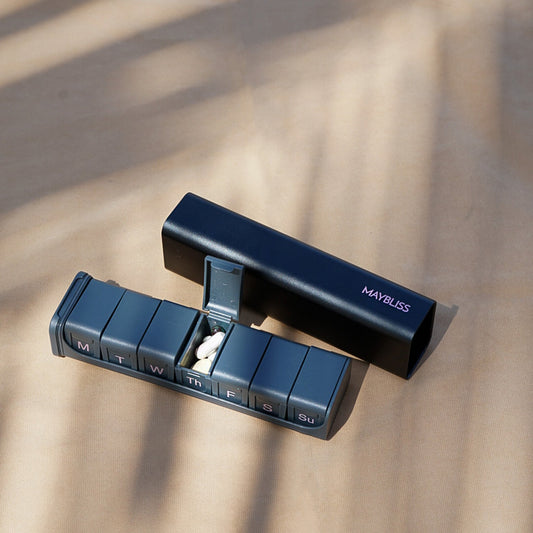
A premium modular pod system makes that distinction easy. Portion a day or a few days at a time, keep the bulk of your supplements in their original packaging, and use individual closed pods for the supplements you need at home, at work, or in transit. Maybliss was built around this more intentional ritual: a polished, portable way to keep your daily stack contained instead of loose in a bag or rattling around in a cheap plastic box.
Be precise about what a container can do. A well-made pill case can create a valuable barrier against everyday handling, spills, and ambient exposure, but not every pill case is airtight or intended for long-term storage. If humidity is extreme or the supplement is exceptionally moisture-sensitive, shorter portioning windows are the smarter move.
Materials Matter More Than They Seem
Cheap pill organizers often feel disposable because they are. Hinges warp, lids loosen, compartments pop open, and odors linger. For people who care about toxin-conscious living, there is another consideration: frequent contact between supplements and unknown, low-grade plastics.
Look for a storage system with durable, tested materials and a design that closes securely. Anodized aluminum offers a refined exterior that stands up to daily use without looking medical or temporary. The interior material still matters, particularly wherever supplements make direct contact. The best systems are transparent about that choice rather than hiding behind vague wellness language.
A Better Way to Build Your Daily Setup
The strongest humidity strategy is layered. You do not need a laboratory-grade cabinet. You need sensible placement, purposeful portioning, and a habit you can repeat without effort.
Start by keeping full-size bottles in their original containers, tightly closed, in a dry location. Avoid opening several bottles near steam or while your hands are wet. Then portion only the doses you expect to take over the next day or several days into a closed, dedicated organizer.
If you use powders, keep them in their original canisters until you are ready to mix them. Do not pre-scoop powder into a daily pill pod unless the product is specifically suited to that use and the container is designed for it. Powders have more surface area and tend to reveal humidity damage quickly.
For travel, keep your organizer inside your personal item rather than checked luggage or a hot car. Hotel bathrooms are especially unreliable storage zones. A sleek pod system belongs in the bedside drawer, travel bag, or desk - not next to a running shower.
Signs Your Supplements Have Seen Too Much Moisture
You do not need to inspect every capsule with a magnifying glass. A quick visual check is enough. Watch for tablets that crumble or stick together, capsules that feel unusually soft, powder that has formed hard lumps, gummies that are sweating or fused, and a noticeable shift in color, smell, or texture.
A desiccant packet that looks damaged, saturated, or missing is another reason to be more cautious. Never assume that shaking a clumpy powder or separating stuck gummies returns them to their original condition. When the product’s appearance or odor has clearly changed, check the label guidance or ask a pharmacist or manufacturer before using it.
Humidity is not the only factor. Heat, light, air exposure, and expiration dates all matter. A supplement that has spent weeks in a parked car may be compromised even if it never got wet.
The Small Habits That Keep a Premium Stack Protected
The most effective changes are almost invisible. Dry your hands before opening bottles. Close lids immediately instead of leaving them on the counter during breakfast. Keep desiccant packets in their original bottles. Refill travel pods on a regular cadence, rather than letting the same pills live in them for months.
If your home is naturally humid, consider the room itself. Air conditioning, a dehumidifier, or simply moving your wellness station out of the bathroom can make a meaningful difference. You do not need to turn your bedroom into a climate-controlled vault. You just need to stop treating humidity as a harmless background detail.
A considered supplement system should feel as good as the routine it supports: clean on the counter, discreet in public, and dependable when life gets busy. Store the bulk supply properly, portion with intention, and let your daily organizer do what it should - make taking care of yourself feel effortless, not fragile.