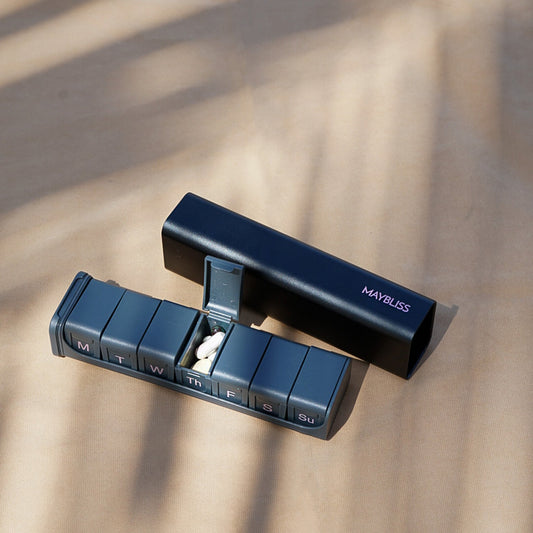

Can Pill Cases Prevent Spills? What Matters Most
A fish-oil softgel rolling beneath an airplane seat. Magnesium capsules scattered into the bottom of a tote. A week’s worth of expensive supplements crushed together after a flimsy lid opens in transit. These are small disruptions, but they make a wellness routine feel needlessly disposable. So, can pill cases prevent spills? The right ones can dramatically reduce them. The wrong ones merely relocate the mess.
A pill case is not just a place to stash capsules. For anyone who buys quality supplements, carries medication daily, or wants a routine that looks as considered as the rest of their life, it is protective equipment. The details that separate a dependable case from a cheap plastic organizer are surprisingly specific: closure strength, compartment design, material quality, capacity, and how the system behaves when life gets mobile.
Can Pill Cases Prevent Spills at Home and Away?
Yes, but only when the case is designed to contain pills independently and stay closed under ordinary pressure, movement, and impact. A loose snap lid may be fine in a bedside drawer. It is much less convincing when it shares space with a laptop charger, cosmetics, or a water bottle.
Spill prevention begins with containment. Each serving should have its own defined space rather than one large cavity where pills can drift, collide, and escape as soon as the lid lifts. Separate compartments also make it easier to see whether you packed today’s essentials without dumping everything into your hand.
The second requirement is a closure that feels deliberate. A lid should seat securely and resist casual opening, yet remain intuitive enough to use when you are headed out the door. This is where many conventional pillboxes disappoint. Their hinges fatigue, their tabs become flimsy, and their lids can pop open when compressed in a bag. A case is only as protective as its weakest closure.
Still, no pill case can promise that nothing will ever spill under every circumstance. If a case is left open, overfilled, submerged, or crushed beneath heavy luggage, it has been asked to do more than any portable organizer should. The goal is not magical invincibility. It is intelligent design that prevents the everyday failures most people actually experience.
What Makes a Pill Case Better at Containing Pills?
Secure individual compartments
Individual compartments are the first line of defense. When one section opens, the rest of your routine should remain protected. This matters especially for people who take several supplements at once: multivitamins, probiotics, omega-3s, magnesium, electrolytes, prescriptions, or a few small wellness essentials.
A well-designed compartment keeps pills from crossing into neighboring sections while you carry the case. That separation protects more than organization. It prevents the frustrating moment when capsules become mixed and you can no longer tell what belongs to which day or dose.
Look closely at the lid-to-compartment connection. Does it close with a positive, satisfying fit? Is there a clear barrier around each section? Does the closure look like it would stay put inside a packed bag? Thin plastic lids that bow or flex are often an early warning sign that the organizer is built for a drawer, not real life.
A layout that avoids overpacking
Even an excellent case can become unreliable when it is packed beyond capacity. Oversized softgels, bulky tablets, and handfuls of capsules need room to sit below the closing line. If pills are pressing against the lid, the compartment may not close fully, and pressure can force it open later.
This is why modularity is more useful than a one-size-fits-all weekly box. Some days call for a simple morning dose. Others require a fuller travel stack. A modular system lets you carry only what you need, with enough dedicated volume to close each compartment properly.
It also reduces a common source of spills: transferring pills from a large organizer into a smaller container at the last minute. Every transfer is another opportunity to lose a capsule on the counter or mix up a dose. Packing directly into portable, purpose-built pods is cleaner and calmer.
Materials that hold their shape
Material choice has a direct impact on spill resistance. Cheap plastic organizers can warp, discolor, develop stress points at the hinge, and feel less secure over time. Their flexibility may seem harmless, but a lid that bends easily is a lid more likely to shift under pressure.
A premium case should feel structurally stable in the hand. Rigid exterior construction helps protect the contents from being compressed in a bag, while thoughtfully selected interior materials support a cleaner storage environment for items you ingest. For people who are intentional about ingredient labels and toxin-conscious choices, the container deserves the same scrutiny as the supplement.
Hardwearing materials also make a case more pleasant to use. A gorgeous object that closes cleanly every morning is more likely to stay in your routine than a cloudy, rattling plastic box you would rather hide.
Protection from the environment, not just gravity
Spills are the obvious problem, but exposure can quietly compromise a supplement routine too. Humidity, heat, and light may affect certain products, particularly when they are left in a car, carried through warm weather, or stored near a steamy bathroom.
A portable pill case cannot replace original packaging for every product. Some medications and supplements have precise storage instructions and should remain in their pharmacy bottle or manufacturer container. That is especially true for moisture-sensitive tablets, powders, medications requiring child-resistant packaging, and products with labeling requirements.
For daily transport, though, a protective case can limit unnecessary exposure and keep pills from being knocked loose among keys, snacks, and cosmetics. Think of it as a short-term, organized carry solution rather than a substitute for medical storage guidance.
Why Travel Reveals Weak Pill Organizers
At home, almost any pillbox can seem adequate. It sits flat on a counter, stays dry, and rarely experiences force. Travel reveals what the design can actually handle.
A reliable travel case needs to tolerate the predictable chaos of a commute, gym bag, workday, or flight. It should not open because it met the corner of a laptop. It should not require you to carry an entire week of pills when you only need two days. And it should allow discreet access when you are at a restaurant, in an office, or sitting in an airport lounge.
The best designs make the routine feel lighter, not more medical. A compact pod that detaches from a larger home system gives you a practical advantage: your full supply can stay organized at home while a smaller selection comes with you. This approach is more refined than hauling bulky bottles or trusting a bargain-bin pillbox with supplements that cost real money.
Maybliss brings this thinking into its BlissPod Pro system, using a patented magnetic pod-and-tray format that keeps at-home organization and portable doses connected without making either feel cumbersome.
Spill Prevention Is Also Routine Protection
When pills spill, the inconvenience is immediate. You have to identify what hit the floor, decide what is safe to keep, clean the area, and often replace what was lost. For prescriptions, a lost dose can be more consequential. For supplements, it can mean wasting products you carefully chose and paid for.
But the larger cost is friction. A routine with too many small annoyances is easier to skip. If your capsules are always mixed together, if packing for a trip means juggling bottles, or if you worry that your tote bag will become a supplement graveyard, consistency starts to feel like work.
A good pill case supports adherence by making the next dose obvious and protected. You can see what you have, take what you need, and move on. There is a quiet confidence in knowing your wellness essentials are contained rather than improvised.
How to Choose a Spill-Resistant Pill Case
Start with your actual routine, not a generic checklist. If you take a few small tablets daily, compact compartments and easy portability may matter most. If you use larger capsules or multiple softgels, prioritize generous compartment depth and a closure that does not strain when full.
Then consider where the case will live. A countertop organizer can favor visibility and larger capacity. A work or travel case needs a more secure form factor, durable exterior protection, and independently closed sections. If you need both, a modular system is usually the more intelligent investment because it avoids forcing one oversized organizer to perform every job.
Finally, assess the experience honestly. Does it feel solid? Can you open one serving without exposing the rest? Would you feel comfortable placing it on a table in public? Design is not superficial here. A case you enjoy using is one you will carry, refill, and trust.
Your supplements are part of a considered routine. They deserve better than a loose bottle cap, a crumpled plastic bag, or a pillbox that gives up the moment your day gets busy. Choose storage that treats protection, portability, and polish as the same standard - because they are.