
Guide to Supplement Storage Materials That Matter
Your magnesium is not cheap. Neither is the fish oil, probiotic, collagen capsule, or carefully built morning stack you rely on to feel your best. Yet many supplements end up in a thin, cloudy plastic pillbox with loose hinges and no real barrier against humidity, spills, or whatever else is floating around in a gym bag.
This guide to supplement storage materials is about choosing a container that respects what is inside it. The right material supports a polished routine, travels well, and helps protect the supplements you have already invested in. The wrong one can crack, trap odors, feel questionable against daily-use products, or turn an organized ritual into a scattered mess.
Why Supplement Storage Material Is More Than a Design Detail
A supplement organizer is not simply a smaller version of the bottle your vitamins arrived in. Once pills are transferred, the container becomes their immediate environment. Its surfaces, seams, closure, and overall construction influence how confidently you can carry your daily doses from countertop to commute to hotel room.
Material alone cannot make supplements invincible. A gorgeous case left in a hot car will still get hot, and a poorly closed container can still allow moisture in. But the material determines whether the organizer feels durable, clean, discreet, and built for repeat use instead of disposable convenience.
For most people, the best choice is not one material in isolation. It is a well-designed system: a strong outer shell, thoughtfully selected interior contact surfaces, secure closures, and compartments sized to keep doses separated. That combination is what turns storage into protection.
A Guide to Supplement Storage Materials: What to Look For
Anodized aluminum: premium structure for everyday carry
Anodized aluminum is a standout choice for an organizer's exterior because it is light, strong, and visually refined. Unlike a basic drugstore pillbox, it can handle the friction of daily carry without looking worn out after a few weeks. Its sleek finish also makes a real difference when you want to take supplements at a desk, restaurant, or airport without pulling out something that feels overtly medical.
The anodizing process creates a hardened protective surface on the aluminum. That matters for scratch resistance and long-term finish quality. Aluminum also offers an opaque barrier, which can be helpful for light-sensitive contents when the overall design keeps the compartments covered.
There is a trade-off. Metal conducts heat, so it is not permission to leave supplements in direct sun or a sweltering vehicle. Think of anodized aluminum as a durable, elevated shell, not a temperature-control device. A quality design also needs appropriate internal surfaces so pills are not resting directly against unfinished metal.
Food-contact plastics: practical, but quality varies dramatically
Plastic is not automatically a bad material. It is often the most practical option for interior trays, removable pods, transparent elements, and seals because it is lightweight, moldable, and resistant to shattering. The issue is that “plastic” tells you almost nothing about quality.
Cheap, unidentified plastic can feel flimsy, stain easily, hold onto strong odors, and become brittle over time. It may also leave you wondering what your supplements are touching every day. For wellness products, that uncertainty is unnecessary.
Look for clearly specified, third-party-tested toxin-conscious materials intended for food contact. High-quality polypropylene and similar modern materials are commonly used where durability and repeated handling matter. The details should be transparent: what the material is, what it is free from, and how it is designed to perform. Vague claims and soft, creaky construction are not premium features.
Transparent plastic has one useful advantage: visibility. Being able to see whether you packed your evening dose can improve consistency. Still, full transparency is not always ideal for supplements that are better kept away from light. In those cases, a covered pod system gives you organization without putting every capsule on display.
Silicone: excellent for seals, not usually the whole solution
Silicone earns its place in a supplement organizer where it can do its best work: around closures and compartment edges. A properly designed silicone seal helps create a more secure barrier against accidental openings, crumbs, and everyday moisture exposure.
Its flexibility makes it especially useful for travel. A rigid lid can close with a satisfying snap, while a silicone element helps account for tiny gaps that would otherwise compromise the compartment. It can also soften rattling and protect the user experience from feeling overly mechanical.
Silicone is not a substitute for smart engineering. A weak hinge, shallow lid, or overcrowded compartment can still create spills. The best storage systems pair well-fitted seals with purposeful closures and enough room for the actual size and shape of common supplements.
Glass: exceptionally clean, less suited to mobile routines
Glass has a strong reputation for purity because it is nonporous, does not retain odors easily, and is highly stable as a contact surface. It is an excellent material for storing powders, liquids, or supplements at home, especially when paired with a tightly fitted lid.
For a daily pill organizer, however, glass has obvious limits. It adds weight, can shatter, and is less forgiving in a crowded tote or carry-on. A glass jar may be beautiful on a vanity, but it does not solve the need to pack a Tuesday afternoon dose in a compact, spill-resistant format.
Use glass when stationary storage is the priority. Choose a lighter, more engineered system when your wellness routine needs to move with you.
The Storage Features That Matter as Much as Material
An expensive material cannot compensate for weak construction. Before choosing any supplement case, inspect the full storage experience: closure, compartment design, portability, and cleanability.
A secure lid should feel intentional, not merely tight when new. Loose snap lids fatigue over time, and hinges are often the first point of failure on bargain organizers. Magnetic modular designs can offer a more elegant answer when they are engineered to keep pods held in place while allowing you to take only what you need.
Compartment size is equally practical. Tiny wells force users to crush, stack, or overfill capsules, creating more friction than the organizer removes. On the other hand, oversized compartments can allow pills to tumble around and make a compact case unnecessarily bulky. The right format has enough capacity for a real wellness stack while staying sleek enough to carry.
Cleaning deserves attention, too. Smooth interior surfaces with removable components are easier to wipe down than deeply grooved, permanently attached compartments. If a case carries oily softgels, colored capsules, or powders, simple cleaning is not a luxury. It is part of keeping the system fresh and pleasant to use.
Match the Material to Your Supplement Routine
If your supplements stay on a bathroom shelf, prioritize a cool, dry location outside the path of shower steam. The original bottle may remain the best long-term home because it includes product-specific labeling, desiccants, and packaging selected by the manufacturer. A premium organizer is ideal for the day or week ahead, not necessarily for decanting every bottle indefinitely.
If you travel frequently, favor impact-resistant materials, a covered design, and compartments that stay closed under movement. Avoid leaving any organizer in checked luggage exposed to extreme temperatures, and never count on a stylish case to undo the effects of heat or humidity.
If you care deeply about reducing questionable plastic contact, look beyond marketing language. Seek transparent material information, thoughtfully selected internal components, and a durable format you will use for years rather than replace every season. A toxin-conscious approach is as much about longevity and construction as it is about a label on the box.
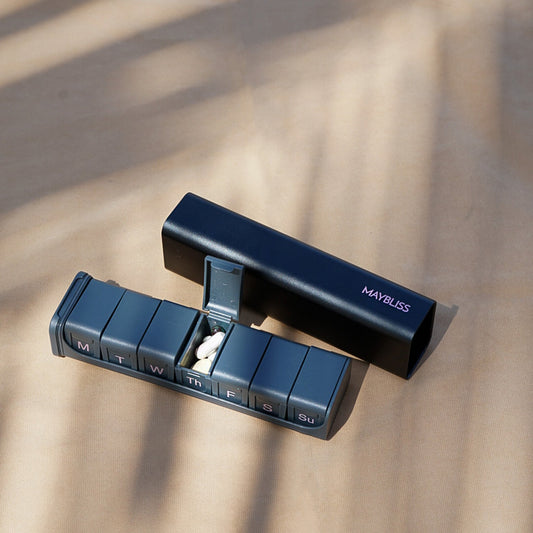
Maybliss built the BlissPod Pro around that exact standard: a patented modular pod-and-tray system with a premium anodized aluminum exterior, toxin-tested materials, and a polished form designed for daily carry. It proves that a pill organizer can look gorgeous while taking protection seriously.
Your wellness routine deserves better than a flimsy container that disappears into the bottom of your bag. Choose storage materials that make taking your supplements feel as considered as choosing them in the first place.