
How to Organize Daily Supplements Beautifully
A beautiful supplement routine can fall apart in one rushed morning. Bottles crowd the counter, capsules roll out of a zip bag, and the question becomes less about wellness than whether you already took your magnesium. Learning how to organize daily supplements is not about creating more rules. It is about giving the products you invest in a protected, visible place in your day.
The right system should make your routine easier to follow at home, discreet to use in public, and dependable when your schedule changes. A flimsy plastic pillbox might hold pills, but it rarely protects the quality, appearance, or intention behind a thoughtfully built wellness stack.
Start With the Routine You Actually Have
Before choosing compartments, look at what you take and when you take it. Pull every bottle from the cabinet, bag, desk drawer, and nightstand. Seeing the full picture is often the fastest way to spot duplicates, expired products, and supplements that no longer fit your goals.
Then separate your stack by timing. Most people do well with a simple morning, midday, evening structure, while others need a before-meal or bedtime category. The goal is not to force every product into the same schedule. It is to create cues that make the right choice obvious when you are half awake or heading out the door.
Keep prescription medications and supplements clearly distinct if both are part of your routine. If a pharmacist or clinician has given you specific instructions, those instructions come first. Some products need to stay in their original packaging, and some supplements have timing considerations that are worth confirming before you pre-sort a full week.
Edit Your Stack Before You Organize It
Organization is more effective when it begins with less clutter. Check expiration dates, discard anything damaged or past its date, and consolidate duplicate bottles only when labels and product details match exactly. Keep a quick record of the brand, dose, and expiration date for anything you move into a daily organizer.
You do not need to carry every wellness product everywhere. Separate your supplements into three practical groups: daily essentials, occasional extras, and travel-only backups. Your daily essentials belong in the organizer you reach for every day. Occasional products can remain in their original bottles at home, where their full labels are easy to reference.
This distinction matters. Overfilling a daily case makes it bulky, harder to check, and easier to ignore. A curated set of essentials creates a routine with momentum.
Choose Compartments by Dose, Not by Day of the Week
Traditional weekly pill organizers are built around a single assumption: everyone takes the same pills at the same time, every day. Real routines are usually more nuanced. You may need a large compartment for fish oil and a small one for a few capsules. You may take different products on workout days, travel days, or evenings when sleep support is part of the plan.
Choose storage that fits the physical reality of your supplements. Measure your largest softgel, count how many capsules you take per dose, and consider whether powders, lozenges, or tiny wellness essentials need their own space. A compartment that is too tight encourages crushing, crowding, or leaving products behind.
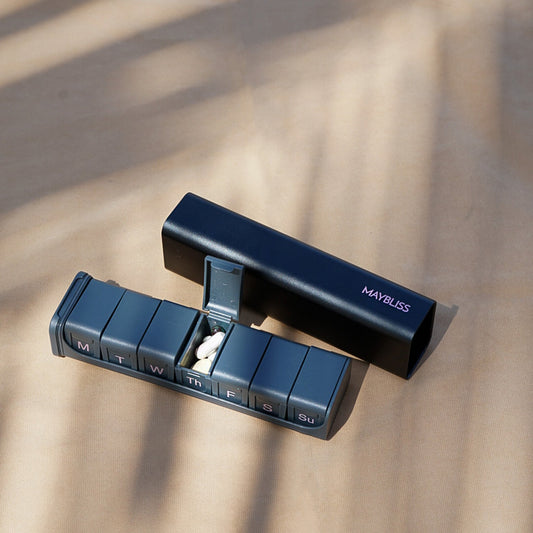
For a flexible routine, modular storage is the smarter format. Individual pods let you build the exact number of doses you need instead of carrying an oversized weekly box. Maybliss' BlissPod Pro uses a patented magnetic pod-and-tray system that makes it easy to keep a polished home setup while taking only the pods your day requires.
Protect Supplements From the Conditions That Ruin Them
A supplement organizer should do more than prevent mix-ups. It should help protect what is inside. Heat, humidity, direct sunlight, and accidental spills are not ideal conditions for many capsules, softgels, and gummies. The bathroom cabinet may be convenient, but steam from showers can make it a poor long-term home for your daily supply.
Store your main collection in a cool, dry area away from windows and heat-producing appliances. A kitchen drawer can work if it stays dry and away from the stove. A dresser drawer or cabinet in a temperature-stable room is often better. Read individual labels, since storage requirements vary by product.
Material matters, too. Cheap plastic organizers can stain, retain odors, warp, and quickly look disposable. If you spend real money on high-quality supplements, choose a case designed with durable, toxin-conscious materials and a secure closure. A sleek anodized aluminum exterior also earns a place on a vanity, desk, or restaurant table without making your routine feel clinical.
Build a Five-Minute Weekly Reset
Consistency comes from a system you can maintain, not a system that looks perfect once. Set one recurring time each week to refill your daily compartments. Sunday evening works for many people, but the best reset day is simply the one you will keep.
Place your bottles beside your organizer, refill one product at a time, and return each bottle before opening the next. This small habit reduces the chance of accidentally adding the wrong supplement or doubling a dose. Once you are done, compare each day or pod against your routine notes before closing everything.
Use this reset to check what is running low. A short note in your phone can track products that need reordering, while your organizer shows exactly how much of the week remains. That visibility is far more useful than discovering an empty bottle on a busy Monday morning.
Make Your Daily Supplements Easy to See
The most elegant organization systems make the healthy choice the easy choice. Keep your morning dose where your routine already happens: beside your coffee setup, near your water glass, or in the drawer you open before work. Put evening supplements near your bedside water or skincare routine, provided the location is cool and dry.
Visual cues work better than good intentions. When your supplements disappear into a cabinet, they are easy to forget. When a compact, beautiful pod is part of the landscape of your day, taking it becomes almost automatic.
If you share a home, label your system clearly or choose separate pods and trays. This is especially useful when partners have different routines or when children are present. Keep all supplements securely out of children’s reach, even if your organizer is designed for convenient adult access.
Create a Travel Version of Your Routine
Travel is where loose bottles and basic pill cases reveal their limits. A bulky bottle collection takes up too much space, while a thin snap-top box can open at exactly the wrong moment. For trips, bring only the doses you need plus a modest buffer for delays.
Keep your travel pods in a clean, protected section of your personal item, not loose at the bottom of a tote with pens, snacks, and keys. Avoid leaving supplements in a hot car or checked luggage for extended periods. If you are carrying prescription medication, it is generally wise to keep it in its original labeled container and in your carry-on.
A modular system gives you a better option than packing a full week of containers when you only need a weekend’s worth. Take the pods that match your itinerary, then return them to the home tray when you are back. It is a small detail, but it keeps travel from disrupting the routine you worked to build.
Common Mistakes That Make Organization Harder
The most common mistake is sorting too far ahead without a reliable way to track dates and doses. A month of pre-filled supplements may sound efficient, but it can make it harder to notice an expired product, a changed protocol, or a missed refill. One week at a time is usually the sweet spot.
Another is treating all storage as equal. A decorative glass jar may look lovely, but it can expose products to light and make them difficult to identify. An unlabeled pouch may be compact, but it offers little protection or accountability. Choose design that earns its beauty through performance.
Finally, do not build a routine around guilt. Missing a dose does not mean the entire system failed. Refill, reset, and return to the next planned moment. The best organization is not rigid. It is resilient enough to support real life.
A daily supplement routine should feel like a considered part of your lifestyle, not a pile of compromises on the counter. Give each dose a place, protect it well, and make that small act of care easy enough to repeat tomorrow.