
How to Store Supplements Safely at Home and Away
Your supplements may look fine on the counter while quietly losing the conditions they need to perform. A bottle left beside a steaming kettle, a gummy vitamin in a sunny car, or capsules tossed loose into a cosmetic pouch can turn an expensive wellness routine into a compromised one. Learning how to store supplements safely is less about being precious with your bottles and more about protecting the quality, potency, and consistency you paid for.
The best storage system does two things at once: it shields supplements from their biggest environmental threats, and it makes your routine easy enough to repeat every day. Beautiful organization is not an extra. It is how a wellness ritual becomes one you actually keep.
The Four Things That Can Ruin a Supplement Routine
Heat, humidity, light, and air are the usual suspects. They do not affect every supplement in exactly the same way, but they can accelerate breakdown, alter texture, and create a less reliable product over time.
Heat is especially tough on softgels, probiotics, oils, gummies, and products with delicate active ingredients. A sunny windowsill, glove compartment, or cabinet above the oven may feel convenient, but these are high-risk spots. If a room regularly feels hot to you, it is not a premium home for your supplements.
Humidity is equally disruptive. Bathrooms are the classic mistake: daily showers create warm, damp air, and every bottle opening invites that moisture inside. Powder can clump, gummies can stick together, and capsules can become soft or brittle. The same concern applies to storing bottles immediately beside a sink or dishwasher.
Direct light can degrade certain ingredients, particularly products in clear packaging or formulas containing oils. Air exposure matters most after a bottle has been opened repeatedly. That is why a tightly closed lid and the original moisture-control insert are more valuable than they look.
How to Store Supplements Safely at Home
Start by choosing one cool, dry, dark location that is easy to access without sitting in a heat zone. A pantry shelf, a closed cabinet away from the stove, or a dedicated drawer in a temperature-stable room is usually a better choice than the bathroom medicine cabinet.
Keep supplements in their original bottles when practical. The packaging often carries the expiration date, serving information, lot number, and storage instructions specific to that formula. It also protects the product from light and moisture in ways a generic container may not. Do not discard the desiccant packet or cotton insert unless the label says otherwise. Those small details can help manage moisture and protect capsules during shipping and storage.
There is one caveat: original bottles are not always the best format for a daily routine. A large collection can become cluttered, hard to see, and too annoying to use consistently. The solution is not to leave pills scattered across a counter. It is to decant only the short-term amount you need into a clean, purpose-built organizer while keeping the primary bottles sealed in a protected location.
Choose the Right Storage Spot
A storage spot should be stable, not merely hidden. Avoid the car, garage, gym bag, windowsill, and kitchen counter near appliances that throw off heat or steam. A bedroom drawer or hall closet shelf can be a better choice, provided it is dry and out of reach of children and pets.
For households with little ones, safety comes before aesthetics. Use a secure location and never assume that a sleek organizer is child-resistant unless it is specifically designed and labeled that way. Supplements can look like candy, especially gummies and brightly colored capsules.
If you share a home, consider a dedicated wellness zone rather than spreading bottles across multiple rooms. One intentional location reduces duplicate purchases, missed doses, and the frustrating question of whether you already took something that morning.
Refrigeration Is Not a Universal Upgrade
A refrigerator feels like a safe default, but colder is not always better. Some probiotics, fish oils, and specialty formulas may benefit from refrigeration after opening, while many tablets and capsules are best stored at room temperature. Condensation can also become a problem when a cold bottle is repeatedly opened in a warm room.
Follow the label first. If refrigeration is recommended, keep the bottle tightly sealed, minimize time outside the fridge, and avoid storing it in the door where temperatures fluctuate more often. If the label says cool, dry place, a clean pantry or drawer is generally the smarter move.
Build a Daily System That Protects Your Pills
The best organizer is not simply one with compartments. It should keep pills separated, protected from accidental spills, and easy to carry without making your routine feel clinical or disposable.
For a weekly setup, fill only the amount you expect to take over the next several days or week. This reduces how long supplements sit outside their original packaging while still eliminating the friction of opening five bottles before breakfast. Keep your organizer clean and completely dry before refilling it. Even a trace of moisture from a recently washed container can be enough to affect powders, gummies, or sensitive capsules.
Avoid combining everything into one large compartment if your stack includes softgels, powders, or items with different textures. Fish oil softgels can leave residue if punctured, gummies can stick, and coated tablets can rub against one another. Separation keeps the experience cleaner and makes it easier to spot a missing dose.
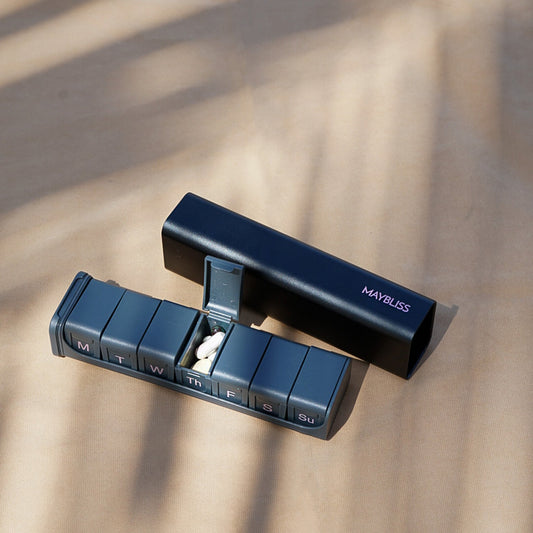
A modular system offers a more refined answer for people who take supplements in different places. You might keep morning essentials in one pod, afternoon support in another, and travel extras ready to grab before a flight. Maybliss is designed around that kind of flexible routine, with magnetic pods that help keep a polished, portable supplement system contained instead of loose in the bottom of a bag.
Travel Changes the Rules
Travel introduces heat, pressure, motion, and the possibility of a bag being left somewhere far warmer than expected. The goal is to bring what you need without exposing a month’s supply to avoidable risk.
Pack a trip-specific quantity rather than your entire collection. Keep supplements in your carry-on whenever possible, especially anything sensitive to heat. Checked luggage can sit on hot tarmacs, in cold cargo holds, or in conditions you cannot control.
For longer trips, bring a small portion in your daily organizer and retain enough product in labeled original packaging to identify it if needed. This is particularly useful for international travel, where unmarked pills may raise questions. If you use prescription medication alongside supplements, keep prescriptions in their original pharmacy containers unless your clinician or pharmacist advises otherwise.
Do not leave supplements in a parked car while running errands, even for a short stop in summer. Interior temperatures rise quickly, and a premium container can protect against spills and light exposure but cannot make extreme heat harmless. Bring the case with you or store it in a climate-controlled space.
Know When to Replace What You Have
Expiration dates are not decoration. They indicate the period during which the manufacturer expects the product to meet its labeled quality when stored as directed. Taking a supplement past that date is not always an emergency, but potency may no longer be dependable.
Use your senses, too. Discard products that smell rancid, show mold or unusual discoloration, have leaking softgels, severely clumped powder, cracked capsules, or gummies that have melted into a single mass. A changed appearance does not always prove a product is unsafe, but it is a clear sign the product has not been stored under ideal conditions.
Write the open date on bottles that are used slowly, especially powders, probiotics, and oils. This gives you a more honest view of what is still in rotation and prevents a beautiful cabinet from becoming a graveyard of half-used wellness intentions.
A Safer Routine Should Feel Effortless
Safe supplement storage is ultimately about respect for your investment and your time. Put the bulk supply in a cool, dry, protected place. Keep daily doses in a clean, secure organizer. Take only what you need when you travel, and never let convenience turn a hot car or humid bathroom into your storage strategy.
When your system is designed to protect what you take and fit naturally into your day, consistency stops feeling like another task. It simply becomes part of the way you move.