
How to Separate Medication Doses Safely
A handful of capsules tossed into a pocket, cosmetic pouch, or oversized pillbox can turn a carefully built routine into a guessing game. If you are wondering how to separate medication doses, the goal is not simply to create neat little compartments. It is to preserve the instructions, timing, identity, and condition of every medication while making your routine easier to follow.
For people managing a daily wellness stack alongside prescriptions, organization can feel surprisingly high-stakes. A missed dose, an accidental duplicate, or a medication taken at the wrong time may matter far more than a cluttered countertop. The best system is clear, intentional, and built around the directions that came with each medication.
Start With the Label, Not the Pill Organizer
Before separating anything, read the prescription label and any pharmacist-provided instructions. Medications may be prescribed once daily, twice daily, every six hours, only as needed, with food, on an empty stomach, or at a specific time of day. “Daily” does not always mean “whenever you remember.”
Keep the original bottle until you have confirmed the schedule and counted what you are packing. The bottle carries the medication name, strength, dosing directions, expiration information, and pharmacy details. That information is essential if a pill is ever separated from its container, if you need to speak with a clinician, or if someone else needs to help in an emergency.
This is also where supplements and medications need a little separation in your thinking. A magnesium capsule, fish oil softgel, and prescription tablet may all fit in the same pod, but they do not necessarily belong in the same dose window. Your prescriber or pharmacist can tell you whether a supplement should be taken apart from a medication, with a meal, or at a different time of day.
How to Separate Medication Doses by Time of Day
The most useful way to organize doses is usually by the moment you will take them, not by the medication category. A compartment labeled “Morning” is more actionable than one labeled “Blood pressure” or “Vitamins,” especially during a rushed weekday.
Build your schedule around your real routine. If you take one prescription when you wake up, another with lunch, and a supplement with dinner, create three distinct daily doses. Avoid vague categories such as “later” or “PM” if you take medications at more than one evening time. A clear system might use Wake Up, Lunch, Dinner, and Bedtime.
For medications taken more than once per day, use the interval printed on the label. A medicine directed every 12 hours generally needs a more consistent rhythm than one simply labeled twice daily. Do not compress doses because you missed one, and do not move a dose substantially to fit a prettier organizer layout. When timing is unclear, ask the pharmacist before making a routine change.
As-needed medications deserve their own treatment. Do not place a PRN medication, such as an occasional pain reliever or nausea medication, into every daily compartment unless your clinician has instructed you to take it on a schedule. Keep it clearly identified and separate from routine doses so you can track whether and when you took it.
Separate by Day When You Need Better Visibility
A day-by-day layout is ideal for medications you take consistently. It gives you a simple visual answer to an easy-to-forget question: Did I take this already?
When you fill a weekly system, choose a quiet, well-lit surface and work with one medication at a time. Place the bottle beside the organizer, fill the appropriate compartments, then put the bottle away before opening the next one. That deliberate sequence reduces mix-ups between similar-looking tablets, particularly when you have several white pills or multiple strengths of the same medication.
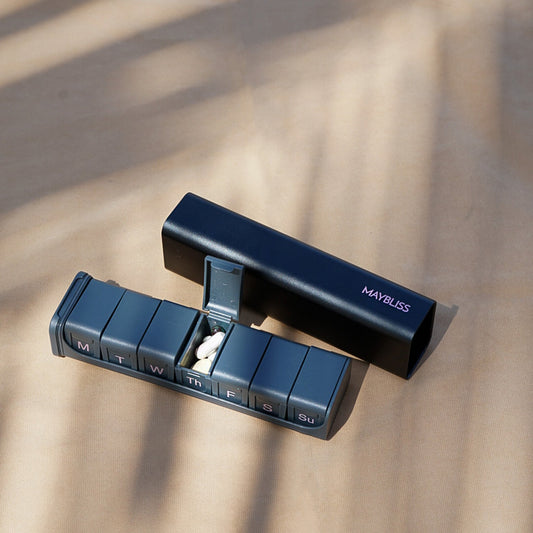
For an especially complex regimen, use both day and time. A seven-day tray with removable daily pods is often more practical than a single large container. At home, your full week stays visible. Away from home, you take only Tuesday’s doses or a few specific time slots, rather than carrying seven days of medication you do not need.
That distinction matters for more than convenience. A streamlined daily pod is easier to check before you leave, easier to use discreetly at a restaurant or office, and less likely to spill inside a bag.
Know What Should Stay in Its Original Packaging
Not every medication is a candidate for advance sorting. Some products are sensitive to light, moisture, air, temperature, or physical handling. Others come in blister packs or special containers for a reason. Moving them prematurely into a pill case can affect quality or remove information you may need.
Ask your pharmacist before transferring medications that are packaged in foil blisters, unit-dose packs, dark bottles, moisture-control containers, or refrigeration packaging. The same applies to medications labeled to keep in the original container. Leave tablets that crumble easily, capsules that soften, and items with unusual storage directions where they belong unless a pharmacist says otherwise.
Avoid mixing loose medications in one compartment when they have very different storage needs. Softgels can leak in heat. Powders can transfer residue. Gummies may stick. A premium organizer protects against everyday chaos, but it is not a substitute for the storage instructions on a prescription label.
If you use a pill case for travel, pack only the amount you need plus a modest buffer for delays. Keep the labeled original bottles with you when practical, especially for prescription medications, controlled substances, international trips, and any situation where identification could become necessary. Never store medications in a hot car, a sunny windowsill, or a damp bathroom.
Create a Clean, Low-Error Filling Ritual
Your medication routine should feel polished, not precarious. Choose one recurring time each week to refill, ideally before you run low. Wash and dry your hands, use a clean and completely dry surface, and make sure each compartment is empty before adding a new week’s doses.
A few rules keep the process safer:
- Do not combine medications from different prescriptions in the same bottle.
- Do not cut, crush, open, or split a pill unless a pharmacist or prescriber has confirmed it is appropriate.
- Do not rely on color, shape, or memory to identify an unmarked pill.
- Do not share medications, even when symptoms appear similar.
Choose Storage That Supports the Routine
A drugstore pillbox may technically divide pills, but a flimsy hinge, loose lid, or cloudy plastic compartment creates friction where you need certainty. Your system should make doses easy to see, hard to spill, and simple to take with you without turning your wellness routine into something you hide at the bottom of a tote.
Look for secure closures, truly separate compartments, and a format that matches your schedule. For travel, removable daily containers are particularly useful because they keep a day’s routine together while leaving the rest protected at home. Materials matter, too. If you invest in high-quality supplements, it makes sense to avoid storing them against cheap, questionable plastic whenever possible.
Maybliss approaches this ritual with a more considered standard: a sleek modular pod-and-tray system designed to keep daily essentials organized, protected, and ready to move with you. The value is not just visual. When your doses have a designated, secure place, you are more likely to follow the plan you and your care team established.
When to Ask a Pharmacist Before Separating Doses
A pharmacist is your best resource when labels feel confusing or your regimen has changed. Ask before reorganizing if you have started a new prescription, changed strengths, take medications with similar names, use a liquid or injectable medication, or have been told to take something at exact intervals.
You should also ask about possible interactions between prescriptions, over-the-counter products, and supplements. “Natural” does not automatically mean neutral. Minerals, herbal products, antacids, and even certain foods can change how some medications are absorbed or work.
The most elegant medication system is one you can trust at a glance. Keep the original information close, separate doses according to real instructions, protect sensitive products appropriately, and build a setup that makes the right next step feel obvious. A beautiful routine is not about having more containers. It is about creating fewer opportunities for uncertainty.