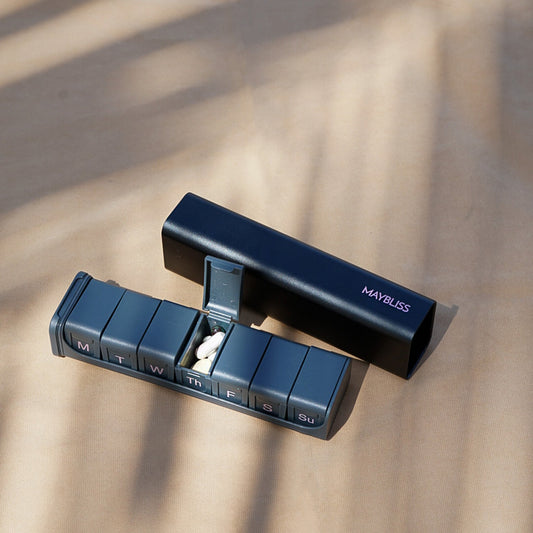

Magnetic Versus Plastic Cases for Pills
A $40 supplement stack deserves better than a cloudy drugstore compartment that pops open at the bottom of your tote. The real question behind magnetic versus plastic cases is not whether one looks nicer on a countertop. It is whether your daily organizer makes the routine easier to keep, protects what you paid for, and feels polished enough to carry anywhere.
For people who take vitamins, prescriptions, minerals, probiotics, or a carefully built wellness stack, a pill case becomes part of the ritual. That makes its material, closure, and layout worth examining closely.
Magnetic Versus Plastic Cases: The Meaningful Differences
A traditional plastic pill organizer is designed for low cost and basic separation. It usually relies on molded compartments, hinged lids, and snap closures. That format can work for simple, at-home use, especially when the case stays in one drawer and holds a few tablets for a short period.
A magnetic modular case is built around a different idea: your routine should move with you without becoming a loose collection of bottles, baggies, and flimsy compartments. Rather than forcing every day into one fixed layout, magnetic pods can connect to a tray or base, then detach when you only need a portion of your routine.
The difference is felt in the small moments. A fixed plastic organizer can be fine until you are rushing through security, packing for a weekend, taking supplements at your desk, or trying to find one evening dose without exposing the rest. A well-designed magnetic system turns those moments into a cleaner, more controlled experience.
That said, not every magnetic case is automatically better. The strength and placement of the magnets, the security of the pod lid, the quality of the interior materials, and the case construction matter far more than a magnetic feature alone.
Plastic Is Convenient, but It Has Limits
Plastic dominates the pill organizer category for understandable reasons. It is lightweight, inexpensive, and easy to mold into rows labeled by day or time. For someone organizing a basic weekly medication routine at home, that can be enough.
The trade-off is that many plastic cases are built to a price, not a long-term standard. Thin hinges can fatigue. Snap tabs can become less reliable. Compartments can feel too small for larger capsules, softgels, or a full supplement stack. And when the lid opens inside a bag, the result is rarely graceful.
Material quality is another consideration. Not all plastics are the same, and a product labeled BPA-free does not tell the whole story about every material in the design. If toxin-conscious storage matters to you, look beyond broad packaging claims. Ask what the pill-contact materials are, whether they have been tested, and whether the product was designed for repeated daily use rather than disposable convenience.
Plastic also tends to show wear quickly. Clear lids scratch, colors fade, and residue from powders or oils can make a once-neat organizer look tired. None of this makes a plastic case unusable. It simply explains why it can feel out of step with a thoughtful wellness routine.
What Magnetic Design Actually Improves
Magnetic organization is most useful when it solves a real behavior problem. It should keep pods in their intended place, make the layout intuitive, and let you bring only what you need without decanting pills into a second container.
With a modular system, your full routine can live in a structured tray at home, while a single pod can go into a work bag, gym bag, or carry-on. The experience is less like managing a medical organizer and more like selecting a compact daily essential.
This approach can also make consistency more visible. When each pod has a clear place, it is easier to see what has been prepared and what is missing. That visual order matters when your routine includes multiple timing windows, from morning electrolytes to evening magnesium.
The best magnetic designs do not rely on magnetism as the only line of defense. Magnets should support organization, while a secure lid and thoughtfully engineered pod protect the contents during movement. If a product uses magnets merely to create a satisfying click but leaves pills vulnerable to spills, it has solved the wrong problem.
A note on electronics and travel
For ordinary travel and everyday carry, small embedded magnets in a pill organizer are generally about organization, not complication. Still, anyone with a medical device affected by magnets should follow their clinician's guidance and keep magnetic accessories at the recommended distance. For air travel, supplements and medications should remain clearly identified when practical, and prescribed medication is often best kept in its original labeled container.
Material Matters When Your Routine Is Expensive
If you invest in premium supplements, the container deserves to reflect that investment. Fish oil softgels, probiotics, powders, capsules, and specialty formulas can be sensitive to heat, moisture, crushing, or unnecessary exposure. No portable pill case can reverse damage caused by poor storage conditions, and a case is not a substitute for the manufacturer’s instructions. But it can reduce the everyday risks of loose storage and cluttered bags.
An anodized aluminum exterior offers a distinctly different ownership experience than thin plastic. It feels substantial, resists the disposable look, and holds up beautifully to repeated use. The material also creates a more discreet silhouette. You can place it on a restaurant table or pull it from your carry-on without feeling like you are unpacking a pharmacy aisle.
Interior materials matter just as much. A premium system should make clear what comes into contact with your supplements and should be designed with toxin-conscious use in mind. This is where third-party testing and transparent material standards become meaningful differentiators, not marketing decoration.
Maybliss built the BlissPod Pro around that higher standard: a patented modular pod-and-tray system that pairs magnetic organization with anodized aluminum construction and toxin-tested materials. The point is not to make pill storage precious. It is to make a daily act of care feel considered, protected, and easy to repeat.
Choose Based on How You Actually Live
A plastic organizer remains a practical choice if your pills stay at home, your routine is simple, and cost is the only deciding factor. There is no need to over-engineer a system you will barely use.
A magnetic modular case is the stronger choice when your routine changes location. It suits the professional who takes supplements between meetings, the frequent traveler who refuses to carry rattling bottles, and the person whose wellness shelf has outgrown a seven-day plastic tray. It is also a better fit when aesthetics affect adherence. If you like using the object, you are more likely to prepare it and bring it with you.
Before choosing, consider three practical questions. Do you need fixed weekly compartments or flexible daily pods? Do you need a closure that can handle life inside a bag? And are you comfortable storing items you ingest in the materials used inside the case? Your answers will tell you more than any trendy feature list.
The Better Case Is the One You Will Use
A pill case should not ask you to choose between function and taste. It should keep your routine visible without making it feel clinical, travel-ready without creating another packing task, and polished without sacrificing practical protection.
Choose plastic when simple and stationary is genuinely all you need. Choose a thoughtfully engineered magnetic system when your supplements are part of an active, design-conscious life. Your routine is already an investment in feeling better. Give it a home that makes showing up for it feel effortless.