
What Causes Supplement Clumping? Storage Explained
A $60 greens powder should not turn into a damp, stubborn brick halfway through the tub. Yet it happens constantly: collagen gathers into pebbles, electrolyte powder hardens around the scoop, capsules stick together, and gummies become one glossy mass. So, what causes supplement clumping? Usually, it is not one dramatic failure. It is a slow collision between sensitive ingredients and the conditions of everyday life: moisture, heat, air, handling, and storage that was never designed to protect what you paid for.
Clumping can be frustrating, but it can also be useful feedback. It tells you that a product is absorbing water, warming up, degrading, or spending too much time exposed to the environment. The right response depends on the supplement and how severely it has changed.
What Causes Supplement Clumping in the First Place?
The short answer is water. The more complete answer is that many supplement ingredients naturally attract water molecules from the air. This property is called hygroscopicity. Once a powder takes on enough moisture, tiny particles begin sticking together. With continued exposure, those small clusters become hard lumps.
Some formulas are especially prone to it. Electrolytes, amino acids, collagen, creatine blends, greens powders, pre-workouts, powdered magnesium, and products containing fruit powders or natural sweeteners can all clump more easily than a simple single-ingredient powder. The product may still be usable when the clumps are minor and it otherwise looks and smells normal, but its texture and ability to mix can suffer.
Humidity is not the only culprit. Warm air can speed up moisture movement and soften ingredients that are stable at room temperature. Temperature swings can be equally troublesome. A container moved from a cool, air-conditioned room into a hot car, or from a cold delivery box into a humid kitchen, may collect condensation. That invisible moisture can be enough to start the clumping process.
The Everyday Habits That Make Clumping Worse
The most common mistake is leaving a container open while you make a shake, answer a text, and finish breakfast. A few minutes might not matter in a dry climate, but a recurring open-lid habit in a humid bathroom or kitchen adds up. Each opening refreshes the humid air inside the container.
Using a wet or damp scoop is another fast track to a hardened powder. Even a scoop that looks dry may carry enough residual moisture from a recently washed hand, shaker bottle, or countertop to create a sticky spot. Once moisture enters, it rarely stays isolated. It migrates through the surrounding powder.
Refrigeration is another well-intentioned move that can backfire. Unless the label specifically instructs you to refrigerate, the refrigerator can create condensation every time the container comes back to room temperature. The same goes for storing supplements beside a steaming coffee machine, above the stove, or in a bathroom where hot showers regularly raise humidity.
Travel adds another layer of risk. A supplement bottle tossed loosely into a tote or checked bag can spend hours in warm cars, airport terminals, hotel bathrooms, and sunlit spaces. A thin, poorly sealed container leaves expensive wellness essentials exposed to conditions they were not made to handle.
Powders, Capsules, and Gummies Do Not Fail the Same Way
Powders make clumping obvious. You see the hard pieces, feel the resistance when you scoop, and notice the formula no longer dissolves cleanly. A few soft clumps may simply mean the powder absorbed a small amount of moisture. A fully hardened container, major color change, unusual odor, or signs of mold calls for more caution. Do not assume you can fix a compromised product by breaking it apart.
Capsules can stick when heat and humidity soften the capsule shell or make its surface tacky. Gelatin and plant-based capsules respond differently depending on their formulation, but neither belongs in a hot, humid environment. When capsules fuse together, crack, leak, or feel unusually soft, check the product label and consult a pharmacist or the manufacturer before taking them. This matters even more for medication, where storage changes can affect performance.
Gummies are particularly vulnerable to heat. Their texture depends on a controlled balance of gelatin or pectin, sweeteners, acids, and moisture. Left in a warm bag, car, or sunny windowsill, they can melt, stick, and lose their clean individual shape. Gummies that have melted into a single mass are not simply less elegant. Their dosage can become difficult to separate accurately.
Softgels bring their own concerns. Fish oil, vitamin D, and other oil-based supplements may become sticky when exposed to heat, and leaking softgels should not be ignored. A strong rancid smell, discoloration, or leakage is a reason to replace the product rather than hope for the best.
Why the Original Container Is Not Always Enough
Manufacturers often package supplements with a desiccant packet, cotton, or an induction seal for a reason. Those components help manage moisture and protect the product during shipping and early use. Removing the desiccant packet too soon can make a moisture-sensitive powder more likely to clump. It is not packaging waste until the product is finished.
Still, the original container only performs as well as its closure and your routine allow. A lid that is cross-threaded, loosely tightened, or repeatedly opened in a humid space cannot maintain the environment the formula needs. And for daily pills, transferring a week or day of supplements into an organizer introduces a new storage question: is that organizer dry, clean, securely closed, and thoughtfully designed to keep contents separated?
Cheap pill organizers often treat protection as an afterthought. Flimsy hinges, loose lids, and porous-feeling plastic can leave a carefully chosen routine feeling exposed and disposable. A premium organizer should protect the ritual as well as the pills, keeping individual doses contained, visible, and ready to travel without a spill-prone scramble at the bottom of your bag.
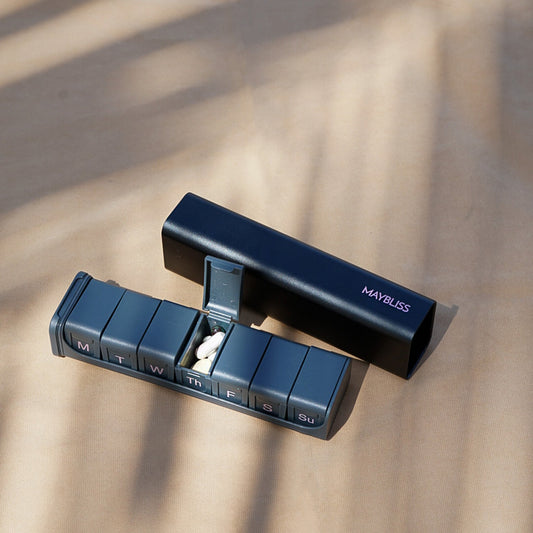
This is where intentional design earns its place. A modular system such as Maybliss lets you bring only the pod you need while keeping your routine organized in a sleek, durable format. That does not make any container a substitute for label instructions or climate control, but it does eliminate the unnecessary exposure created by loose pills, poorly closed compartments, and improvised storage.
How to Prevent Supplement Clumping Without Overcomplicating It
Start with the label. Storage instructions vary by formula, and the product maker knows whether refrigeration, light protection, or a specific temperature range is necessary. If the label says to store in a cool, dry place, choose a cabinet or drawer away from direct sunlight, steam, and major temperature changes. The bathroom medicine cabinet is often less dry than it sounds.
Keep powder lids closed tightly and use a completely dry scoop. If a product comes with a desiccant packet, leave it inside unless the label says otherwise. Never use a moisture absorber that was not intended for food or supplement contact, and do not consume desiccant packets.
For pills, capsules, and softgels, fill only what you will use within a reasonable period rather than decanting a month of supply into a container that travels everywhere with you. Shorter refill cycles reduce exposure to heat, humidity, friction, and light. They also make it easier to notice if a product has changed.
When traveling, keep supplements out of parked cars and away from direct sun. Carry them in a bag you control when possible. If you are headed somewhere humid, be more disciplined about closing containers immediately and storing your wellness essentials in the coolest dry area available.
Can You Still Use a Clumped Supplement?
It depends on the product and the change. A powder with a few small, dry clumps that breaks apart easily may be a texture issue rather than a safety issue. If it has no unusual smell, color change, moisture damage, or expired date, it may still be fine to use according to its label. But do not treat that as a universal rule.
Discard or seek professional guidance when you notice mold, a sour or rancid odor, visible wetness, leaking softgels, damaged capsules, major hardening, or any change that makes dosing uncertain. For prescription medication, contact a pharmacist rather than guessing. Medication storage has higher stakes, and the right answer can differ by drug.
A polished wellness routine is not just about remembering to take your supplements. It is about respecting the products in that routine - storing them with the same care you used when choosing them. Keep them dry, keep them protected, and let your daily system look as considered as the habits it supports.