
How to Prevent Pill Bottle Moisture Damage
A beautiful supplement routine can unravel in one humid bathroom. Capsules soften, powders clump, tablets develop spots, and a bottle of premium vitamins suddenly looks less like a wellness investment and more like a science experiment. To prevent pill bottle moisture damage, focus on the moments moisture gets in: where you store supplements, how you handle them, and what happens when you take them on the go.
Humidity is not always dramatic. Often, it arrives quietly through a steamy shower, damp fingertips, an open cap left on the counter, or a travel bag that moves between air-conditioned rooms and summer heat. The goal is not to make every bottle airtight forever. It is to build a dry, consistent system that gives your supplements the protection they deserve.
Why moisture changes pills, capsules, and supplements
Many supplements are designed to remain stable in a dry environment. Once moisture enters the equation, ingredients can absorb water from the air and begin to change texture, shape, or performance. Gummies may stick together. Effervescent tablets can react early. Gelatin capsules can become soft or brittle depending on conditions. Powder-filled capsules may swell, crack, or turn tacky.
That does not mean every discolored tablet is automatically unsafe, or that one day of humidity ruins an entire bottle. Stability depends on the formula, packaging, storage temperature, and how much moisture has entered over time. Still, visible changes are a clear reason to pause. If a product is clumped, cracked, leaking, unusually smelly, sticky, or otherwise different from when you opened it, check the label and ask a pharmacist or the manufacturer before taking it.
There is also a financial reality. High-quality magnesium, probiotics, fish oil, adaptogens, and specialty nutraceuticals are not inexpensive. Leaving them exposed on a bathroom counter is a low-grade form of waste that adds up bottle after bottle.
Prevent pill bottle moisture damage before it starts
The smartest move is simple: keep supplements in the environment their label expects. For most products, that means a cool, dry place away from direct sunlight. A bedroom drawer, pantry shelf, or dedicated cabinet outside the bathroom is typically a better choice than the medicine cabinet above the sink.
Bathrooms are convenient, but they are built for moisture. Each shower creates a surge of warm, humid air, and the room often stays damp long after the mirror clears. Kitchens can be tricky, too. A cabinet near the dishwasher, stove, kettle, or sink is not ideal, even if it feels organized.
Read each label before relocating anything. Some medications and supplements have specific storage instructions, and a few products may need refrigeration after opening. Do not assume the refrigerator is automatically safer. Refrigerators can introduce condensation when a cold bottle is opened in a warmer room, and not every formula belongs there.
Keep the original bottle whenever possible. It was selected for that product's shelf-life needs and may include a desiccant packet or canister that helps manage small amounts of humidity. That little packet is not packaging clutter. Leave it inside, keep it dry, and never ingest it.
Dry hands are part of the system
A premium bottle cannot compensate for wet hands repeatedly reaching inside. Take pills with completely dry fingers, then close the cap promptly. If you have just washed your hands, dried them quickly, and still feel moisture around your fingertips, wait a moment. It sounds minor, but repeated contact transfers moisture directly to tablets and capsules.
Avoid shaking pills into a wet palm or placing them beside a glass of water where splashes are inevitable. If you use a spoon or scoop for powdered supplements, make sure it is clean and fully dry before it goes back into the container. One damp scoop can harden a powder that was perfectly fine the day before.
It is also worth resisting the habit of opening multiple bottles at once during a rushed morning. Open, dispense, close, then move to the next. That small sequence keeps the entire routine cleaner and more controlled.
Think twice before transferring pills
Transferring a week's supply into a portable organizer is one of the best ways to make a routine easier to follow. It is also the point where storage decisions matter most. The ideal organizer reduces exposure without making claims it cannot support.
Look for a case with secure individual compartments, a reliable closure, and a form factor that keeps pills from wandering into one another. Cheap plastic boxes often become loose at the hinge, pop open inside a tote, and collect residue in corners that are difficult to clean. A lid that only appears closed is not a barrier you want protecting costly supplements through a long workday or flight.
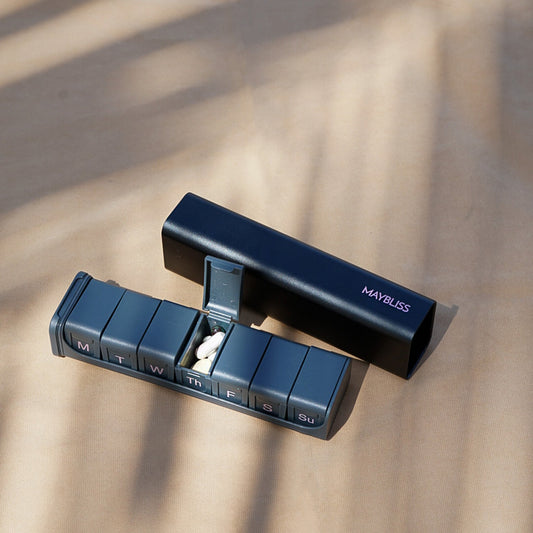
Material matters, too. For people who are thoughtful about what touches their wellness essentials, an organizer should feel like an upgrade from disposable plastic. Maybliss approaches this differently with a sleek, patented modular system designed for intentional routines, combining a durable anodized aluminum exterior with toxin-conscious, third-party-tested pod materials.
One important trade-off: a portable pill case is best for the amount you will actually take during the day or over a short trip, not necessarily for decanting months of inventory. For long-term storage, original packaging is usually the more conservative choice. For daily carry, a well-made pod system keeps the essentials contained, discreet, and far more likely to make it out the door with you.
Travel creates a different kind of humidity problem
Travel exposes supplements to rapid changes in temperature and air moisture. A bottle packed in a hot car, checked luggage, or a beach tote can heat up quickly. Moving that container into a cool hotel room may create condensation risk, especially if it is opened immediately.
Keep pills in your personal item when possible, away from direct sun and the temperature swings of a car trunk. Do not leave your organizer on a poolside table, in a steamy gym locker room, or beside a hotel bathroom sink. A drawer in the main room is usually a better temporary home.
For a short trip, pack only what you need plus a small buffer for delays. This limits the number of pills exposed to travel conditions while leaving the bulk of your supply safely stored at home. If you travel with prescription medication, keep it in its labeled original container when appropriate and follow any instructions from your pharmacist, clinician, or airline.
What to do when you spot moisture damage
Do not try to rescue pills by air-drying them, separating stuck capsules, or returning them to the bottle with extra desiccant. Once a product has visibly changed, you cannot confirm its quality by appearance alone. Treat it as a decision point, not a cosmetic issue.
Start by checking the expiration date, storage language, and any product-specific guidance. Contact the manufacturer for supplements or a pharmacist for medication if you are uncertain. They can tell you whether the change is expected, whether the product should be replaced, and how to dispose of it safely if needed.
Then identify the source. Was the bottle living in the bathroom? Did a desiccant packet get thrown away? Did you refill a pill case with damp hands? Was it left in a hot car? The answer is often obvious once you look at the routine instead of the bottle.
Build a routine that protects what you buy
The best storage system is the one you will use when you are late, tired, or packing for a weekend away. Give your supplements a dedicated dry zone. Keep daily doses in a secure organizer that is easy to open but hard to spill. Refill it with dry hands, clean it regularly according to its care instructions, and return bulk bottles to their proper storage place immediately.
That is how a wellness routine starts feeling less fragile. Your supplements stay cleaner, your bag stays more organized, and the products you chose carefully are ready when you are. Protection does not need to look clinical or cluttered. Done well, it becomes part of the ritual.