
Silicone Versus Metal Pill Cases Compared
A pill case is not a throwaway detail when your daily routine includes premium supplements, prescription medication, or both. The question of silicone versus metal pill cases comes down to more than appearance: it is about what touches your pills, how the case performs in a bag, and whether you will actually want to use it every day.
Silicone has a soft, flexible appeal. Metal brings structure, polish, and lasting presence. Neither material wins in every possible scenario, but for people building a consistent, elevated wellness routine, the differences are worth examining closely.
Silicone Versus Metal Pill Cases: The Core Difference
Silicone pill cases are typically lightweight, pliable, and inexpensive to produce. Their soft construction can make them easy to squeeze into an overpacked tote or gym bag, and silicone is naturally quiet and grippy. Many options also use a flexible lid that presses into place without hinges or mechanical closures.
Metal pill cases, often made from aluminum or stainless steel, take a more architectural approach. They hold their shape, look intentional on a countertop, and can better withstand the daily friction of travel, drawers, and handbag carry. A well-designed metal case feels less like a temporary container and more like a personal wellness accessory.
The material alone does not determine quality. A poorly finished metal case can scratch, dent, or have unreliable closures, just as low-grade silicone can retain odor or feel tacky. The real comparison is between thoughtful engineering and convenience-led construction.
Cleanliness Starts With the Material and the Details
For many supplement users, the first concern is contact material. Pills, capsules, gummies, and softgels can sit in a case for hours or days. That makes surface quality, testing standards, and ease of cleaning more relevant than the color of the organizer.
Silicone can be a good material when it is high quality and properly formulated. But “silicone” on a product listing does not automatically answer questions about fillers, dyes, additives, or the quality control behind the finished case. Softer silicone also has a tendency to attract lint, dust, and residue, especially when carried loose in a bag.
Metal surfaces are generally smooth, nonporous, and easy to wipe clean. Anodized aluminum adds a durable protective finish while delivering the crisp, refined look that standard pillboxes lack. Still, responsible material choices matter here too. Not every metal case is created with the same coatings, seals, or internal components.
If toxin-conscious storage is a priority, look beyond broad claims like “food-grade” or “BPA-free.” Ask what materials make up the full system, including lids, gaskets, coatings, and any plastic or silicone elements that come into direct contact with your routine.
A note on odor and residue
Fish oil, probiotics, turmeric, magnesium, and herbal supplements can have distinct odors. Silicone may hold onto those smells over time, particularly if a capsule leaks or a gummy leaves a film behind. It can be washed, but odor retention is a practical frustration for anyone who wants a case to feel fresh and polished.
Metal is less likely to absorb odor. When paired with removable, washable components or a wipeable interior, it is the easier choice for keeping a daily system looking composed instead of visibly worn in.
Durability Is About More Than Surviving a Drop
Flexible silicone cases do not usually crack when dropped. That is a real advantage. Yet flexibility has a trade-off: the same material that bends easily can compress under the weight of other items in your bag. Capsules can get jostled, softgels may be squeezed, and loosely fitted lids can pop open when pressure hits the wrong spot.
A quality metal pill case creates a rigid shell around what is inside. This matters when your supplements share space with a laptop charger, water bottle, keys, or makeup bag. Metal is not indestructible, and thin, untreated aluminum can dent. But a well-built anodized aluminum design is designed for repeat use, not a season of travel.
Hinges, latches, and compartment architecture matter as much as the outer shell. The most attractive case is not useful if pills migrate between sections or spill into the bottom of your bag. Look for secure closure, defined compartments, and a design that stays closed when carried vertically or upside down.
Pill Protection: Where Metal Usually Pulls Ahead
Supplements are an investment. A daily stack can include costly specialty vitamins, prescription medication, adaptogens, electrolytes, and travel-size wellness essentials. Leaving that investment in a thin, translucent organizer beside a sunny window or in a hot car is not a considered storage strategy.
Neither silicone nor metal makes a pill case automatically airtight, waterproof, or heat-proof. Those claims depend on the closure and product construction. But metal offers two clear advantages: a more protective physical barrier and complete opacity. Unlike translucent silicone, an opaque metal shell keeps light away from its contents while delivering a more stable, structured carry experience.
Humidity protection is equally nuanced. If you live in a humid climate, travel often, or carry pills into the bathroom, choose a case with a secure lid and avoid leaving it open. For moisture-sensitive products, retain manufacturer packaging or use desiccant guidance where appropriate. A premium pill case is for daily organization, not a substitute for the storage instructions printed on your supplement bottle.
The Travel Test: What Happens in Your Bag?
A pill case should make travel lighter, not add one more object to manage. Silicone wins on softness and weight, which can work for short outings or a minimal emergency dose. But it can look casual, collect bag debris, and become difficult to locate in a dark tote.
Metal is the stronger choice when your pill case is part of your everyday carry. Its firm profile is easier to find, easier to open with intention, and far more discreet to use in public. There is a meaningful difference between pulling out a flimsy drugstore organizer at a restaurant and reaching for a sleek, compact case that belongs next to your wallet or favorite lip color.
The best travel systems also let you take only what you need. Modular storage changes the equation: instead of carrying a full week of supplements everywhere, you can move a single daily pod from your countertop setup into your bag. That keeps your routine visible at home and portable when your schedule shifts.
Design Is Not Superficial When It Builds Consistency
The pill case you see every morning has a quiet influence on adherence. If it is cloudy, cluttered, hard to open, or embarrassing to use, it is more likely to end up forgotten in a drawer. A beautiful object earns a place in your environment. That is not vanity. It is practical behavior design.
Metal cases naturally support a more premium visual language. Clean lines, satisfying weight, and a durable finish can make supplement organization feel like an intentional ritual rather than a medical chore. Silicone has a playful, casual quality, but it rarely delivers the same level of permanence or polish.
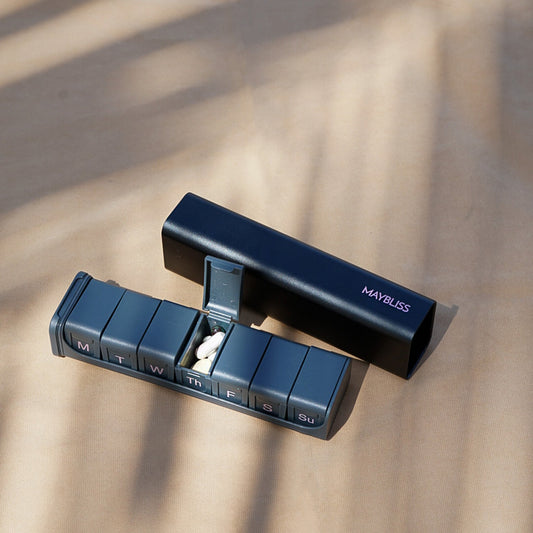
For people who care about both performance and aesthetics, the ideal answer may not be a single oversized case. Maybliss approaches the category with a patented magnetic pod-and-tray system: a structured anodized aluminum home base paired with portable pods that keep daily doses organized without forcing your entire routine into one bulky container.
How to Choose the Right Material for Your Routine
Choose a silicone pill case if you need something ultra-light, flexible, and inexpensive for occasional use. It can be a fine backup for a few doses in a low-stakes setting, especially when you value compressibility over structure.
Choose a metal pill case if you take supplements or medication daily, carry pills outside the house, want a more toxin-conscious and polished storage experience, or simply refuse to let an expensive wellness routine live in a disposable-looking box. Prioritize anodized or high-quality stainless construction, a reliable closure, and a compartment design that prevents mixing and spills.
For many people, the decision is not really silicone versus metal. It is whether their current organizer supports the routine they have worked hard to build. Choose the case that protects your pills, fits your real schedule, and makes taking care of yourself feel easier to repeat tomorrow.